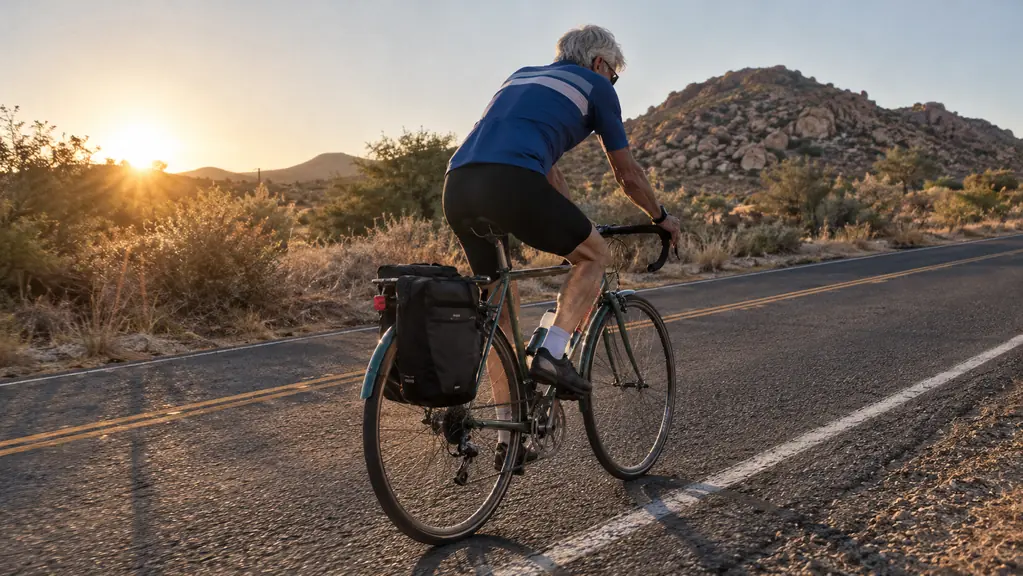
Two pairs of bib shorts, one pair of legs, and only one of them has been on my body for the last two years. The Przewalski Bib Shorts are what I bought myself in the first week of March, size Large, two pairs, rotated through every long day since. Ed, my riding partner, wears the Pearl Izumi Quest bibs. I have not ridden a mile in his. I have stood next to them at the tailgate in Chino Valley, watched him pull them on in a parking lot, and heard his opinion of them on a climb where neither of us had breath for anything else.
The short answer, before I get into the weeds. The Przewalski bibs win on what you hand over at the till, on a pad generous enough for a 60 mile day, and on having a pocket you will actually use. The Pearl Izumi Quest bibs win on being something you can pull on in a shop before you pay, on a pad that suits a rider who wants less under him, and on a brand that has been in cycling clothing long enough that a counter exists to walk up to. If you want it in one line: buy the Przewalski when the budget is the deciding vote, buy the Quests when the shop is.
| Przewalski Bib Shorts | Pearl Izumi Quest Bibs | |
|---|---|---|
| What you hand over at the till | Budget tier. The pair that got me out of plain padded shorts for good. | A step up in cost, and bought at shop pricing. |
| Trying before you buy | Online order. Regular fit, mid rise, and the fit feedback on the listing runs positive, but you are guessing when you click. | Shop stock, so you can pull them on and walk the length of the counter. |
| The pad | 3D padded chamois, generous. On a short spin it feels like more than the ride deserves. | A different pad altogether, and Ed prefers the feel of his own on the longest days. |
| A utility pocket in the shorts, room for a house key and a card. | Nothing Ed has shown me, and nothing I found reading the listing. | |
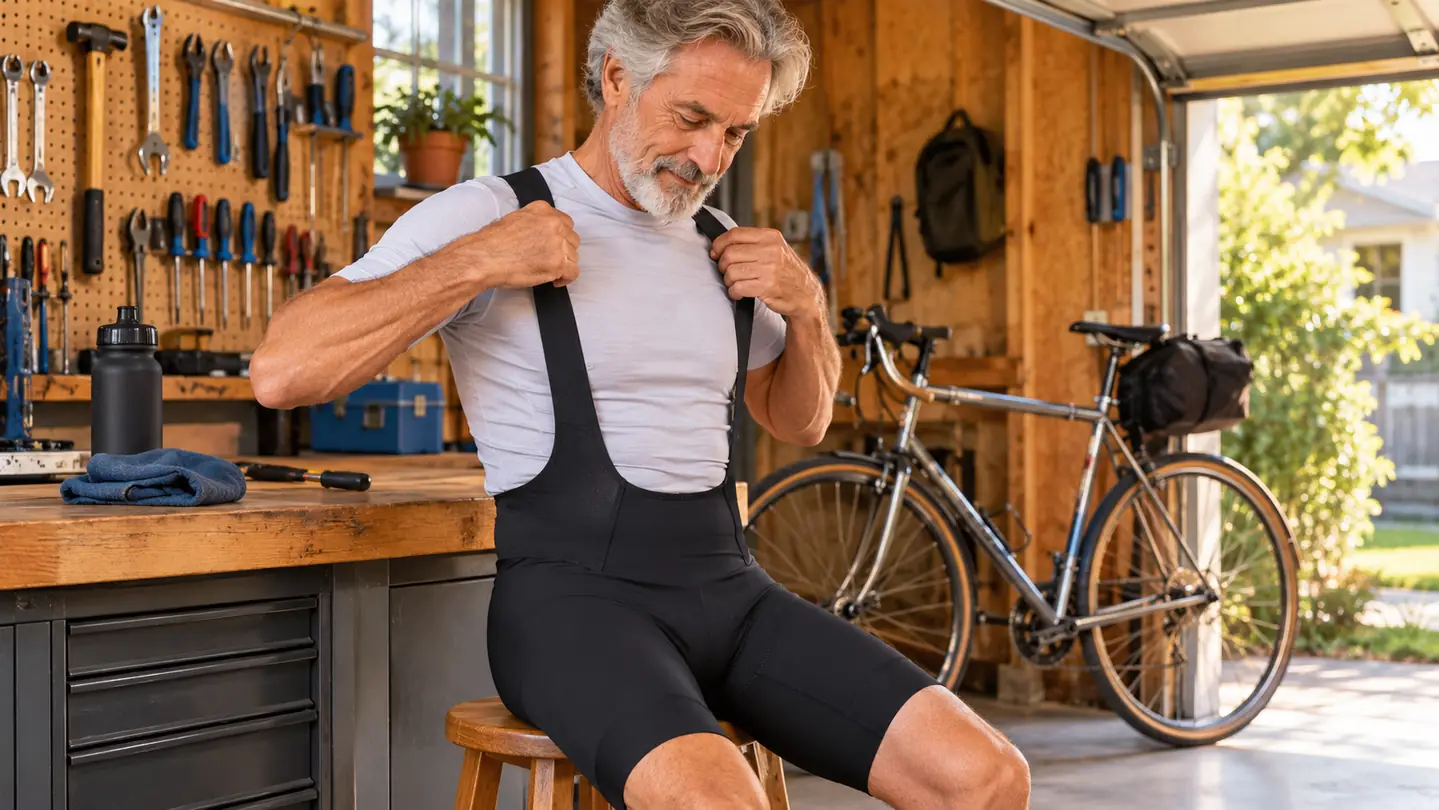
| How it goes on | Pull on, sleeveless, straps over the shoulders. | Pull on, sleeveless, straps over the shoulders. Same arrangement. |
| Weight | 4.96 ounces on the listing. | Not something I have weighed, and I am not going to guess at it. |
| Two seasons in | Two pairs, cold washed, hung to dry, roughly 8,000 miles, no seam failure. | Ed's are still going, and he rides the same roads I do. |
| If something fails | A return window and a shipping label. | A shop counter and a brand that has been in cycling clothing for decades. |
| Best for | Long days on a budget, 50 to 70 miles with real climbing. | Riders who want to try before paying, or who did not get on with a bulky pad. |
Where the Przewalski Bib Shorts Win
Price is the reason I own two pairs instead of one, and I am not going to dress that up. I bought them in the first week of March about two years ago, in the same week I bought a saddle, a multitool, a floor pump and a GPS computer, because one 80 mile ride the previous fall had shown me how little my old kit was doing for me. Two pairs meant one could hang on the line while the other was on the bike. That was the whole plan. When a bib short sits at the budget end of the shelf, buying two is also the test: if the first pair falls apart early, you have lost less than you would have lost on one pair from a shop. Two years later, both pairs are still in rotation, and the seams are still seams.
The pad is the second reason and the more interesting one. It is a 3D padded chamois, and it is not subtle. On a short spin around town it feels like more pad than the ride deserves, and I have said that out loud more than once. On a 70 mile day with the climbing we get around here at 5,400 feet, that stops being a complaint and becomes the point. By the last ten miles my lower back is stiff and my hands are worse, but the place where I meet the saddle is not what sends me home. There is also a utility pocket in the shorts, which sounds like nothing until you have spent a season patting a jersey pocket at every stop sign. Mine holds a house key and a card, and it has never let either one out.
Where the Pearl Izumi Quest Bibs Win
You can try the Quests on, and that is not a small advantage. Cycling clothing is the one category where a size chart is close to useless. The same size Large fits two riders of the same weight differently depending on where they carry it, and after 50 most of us carry it somewhere different than we did at 30. Ed bought his at a shop, pulled them on, walked the length of the counter and paid for them. If they had been wrong, they would have stayed at the shop. My first pair of Przewalski arrived in a mailer, and I got lucky. The fit is a regular fit and mid rise, and the feedback on the listing runs positive, but I was guessing when I clicked the button.
Ed also prefers the feel of his own pad, and he has earned the right to that opinion. He is 70, he rides the same 50 to 70 mile days I ride, and he has pulled my bibs on at least once to see what I had been going on about. His verdict was polite and clear: he likes his own better. I like mine. Two riders, two answers, and neither of us will be talked out of it at a stop sign. The other thing the Quests have going for them is the company behind them. Pearl Izumi has been making cycling clothing a long time, the bibs are stocked where you can see and touch them, and if a strap lets go in the second season there is a counter to walk up to. My recourse is a return window and a shipping label.
What I Rode and What I Did Not
I want to be plain about what this comparison is worth. I have not ridden one mile in the Pearl Izumi Quest bibs. Everything I know about them comes from standing next to Ed's bike, watching him get dressed in a parking lot, listening to him, and reading the listing. I am not going to invent saddle time I did not have. What I do have is two years and roughly 8,000 miles on the other side of the question, in two pairs, on the roads between Prescott and Chino Valley, plus a notebook that says what wore out and when.
My testing is not laboratory testing and I would not call it that. It is a 67 year old retired shop teacher with a stiff lower back, sore hands and a left knee that complains on steep climbs, riding 50 to 70 miles twice a week from spring through fall on a steel touring bike with 32 mm tires, plus shorter midday loops in winter. About 4,000 miles a year. I wash bibs cold and hang them to dry, partly because the label says so and partly because I am fussy about replacing things. Most of what I can tell you is about how a garment behaves at mile 60, not mile 5, because mile 60 is the part I am paying for.
Two Years and About 8,000 Miles
Here is what two years did and did not do to the Przewalski bibs. The fabric at the inner thigh, which is where everything goes first, has thinned but has not gone transparent. The pad has kept its shape through two years of cold washing, and it does not bunch when I stand on a climb. The straps have not stretched enough to sag. What has changed is that the leg openings have loosened a little, which I notice on the first mile and forget by the fifth. Both pairs show the same wear in the same places, which tells me it is the garment and not one bad pair that slipped through.
I rotate them for a reason beyond laundry. Wearing the same bib short three days running is how you find out that any fabric holds moisture, and a damp pad is how riders end up with trouble they then blame on the shorts. Two pairs, alternating, hung to dry between rides, has kept both of mine serviceable. If you are buying your first pair and you ride twice a week, buy two if you can. If you cannot, wash the one pair the same day, hang it overnight, and if you start getting sores that do not clear up in a few days, see your doctor rather than buying a different pad.
About 8,000 miles on two pairs, and the seams are still seams. That is the reason I bought the second pair, and the reason I would buy a third.
The Thing Nobody Mentions: Bathroom Stops
Bibs are not shorts. There is no waistband to push down, which is the whole point of them, and there is also no quick way out of them. On a ride with a jersey, a vest and knee warmers on, a stop in the brush takes longer than it did in regular shorts, and in cold weather it takes longer still. On a 70 mile day I plan around it and pick my stops. I have decided that trade is worth it, because a waistband cutting into a soft middle at mile 50 is a worse problem than a slower stop at mile 30, and that is the honest reason bibs exist.
If your rides are under 20 miles and you rarely stop, bibs are more garment than you need, and the bathroom argument is the one that should decide it for you. That is not a knock on either of these. It is just what happens when you are honest about how you actually ride rather than how the catalog photographs suggest you ride.
The Pad Question, in Plain Terms
Pad discussions go sideways because people treat thickness as quality. It is not. A pad that is too much for your saddle and your position will rub you where a thinner one would not, and a pad that is too little leaves you sore by mile 40. The Przewalski pad suits my saddle and the upright position I ride on a touring bike. Ed sits differently, on a different bike, and he likes his own. That is the honest state of the question: a pad is not better or worse in the abstract, it is better or worse for one rider on one bike over one distance. Anybody who tells you otherwise is selling something.
The other half of it is that padding never fixes a fit problem. If a bib short moves around on you, no chamois will save the day, and that is as true of a shop pair as of a budget pair. What I would check first is the leg opening and the straps. If the opening rides up and the straps dig into your shoulders, the pad is not the argument you should be having. Send them back and try a different size.
The pair that has carried me through 8,000 miles
Two pairs, size Large, cold washed and hung on a line for about two years. If your long days look like mine, this is the place to start.
Amazon Check Today's Price on Amazon →Who Should Buy Which
Buy the Przewalski bibs if your days look like mine. Fifty to 70 miles on chip seal and rough shoulder twice a week, real climbing, a budget that also has to cover tires and tubes, and a willingness to order a size and take a small gamble. Order two pairs if you can, rotate them, and wash them cold. The pad being a little generous is exactly what you want on the long days and only mildly annoying on the short ones, and the pocket means you stop patting yourself down at every intersection.
Buy the Pearl Izumi Quest bibs if you would rather pull them on in a shop, if your last pair lasted five seasons and you want the same thing again, or if you have ridden a bulky pad before and did not get on with it. Paying more for the ability to walk out of a shop knowing the thing fits is a reasonable way to spend money, and Ed would tell you the same thing with more conviction than I just did. What I would not do is buy anything sight unseen in a size you have never worn, from any brand, on the week before a long ride you have been looking forward to.
If the waistband is usually what quits first, start here
Przewalski bib shorts, size Large, in rotation here for about two years. Sizing and today's price are on the listing.
Amazon Check Today's Price on Amazon →