
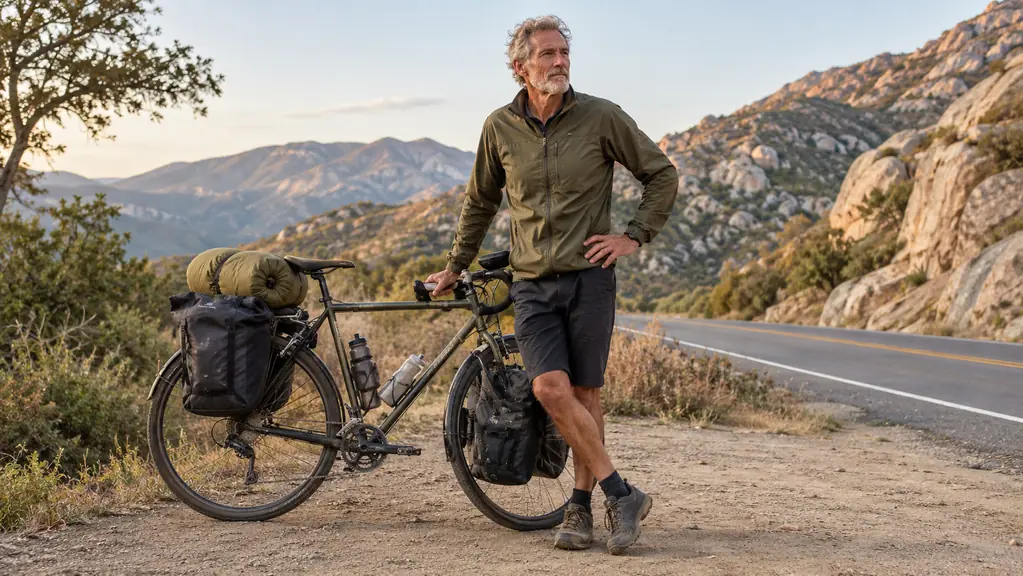
I bought the Brooks England Cambium C17 Carved in the first week of March, about two years ago, along with four other things I had put off buying for too long. I was 65 then. The saddle that came with my steel touring bike had been tolerable for two hours and miserable for five, and my long days run 50 to 70 miles twice a week, spring through fall, with most of it climbing because Prescott sits at about 5,400 feet.
Two years on, that saddle has somewhere around 8,000 miles under it. I ride about 4,000 a year. It has been rained on, dusted with Chino Valley grit, and left in a cold garage through two winters. I have not tightened anything on it, treated it with anything, or covered it. These are my notes from the bench, written the way I keep notes on anything else in that garage: what worked, what did not, and what I would tell a man my age standing in the shop door.
The Quick Verdict
Comfortable from the first ride with no break-in period, weatherproof, and nothing to maintain. It is heavier than a race saddle, and the firm top is not what most people expect when they press a thumb into it.
Amazon Check Today's Price →See the current price and the full spec sheet on Amazon
The Brooks Cambium C17 Carved: vulcanized natural rubber, organic cotton canvas top, center cutout, about 450 grams, about 6.5 inches wide, rated to 100 kg.
Amazon Check Today's Price on Amazon →How I've Used It
One bike, one saddle. My touring bike has a 9 speed drivetrain, rim brakes, and 32 mm tires with tubes and Presta valves. I run about 60 psi front and 65 rear, which is my own setting and not a rule for anybody else. I do my own wrenching at a bench in the garage and I keep a seat bag with one spare tube, a patch kit, two plastic tire levers, and a multi-tool.
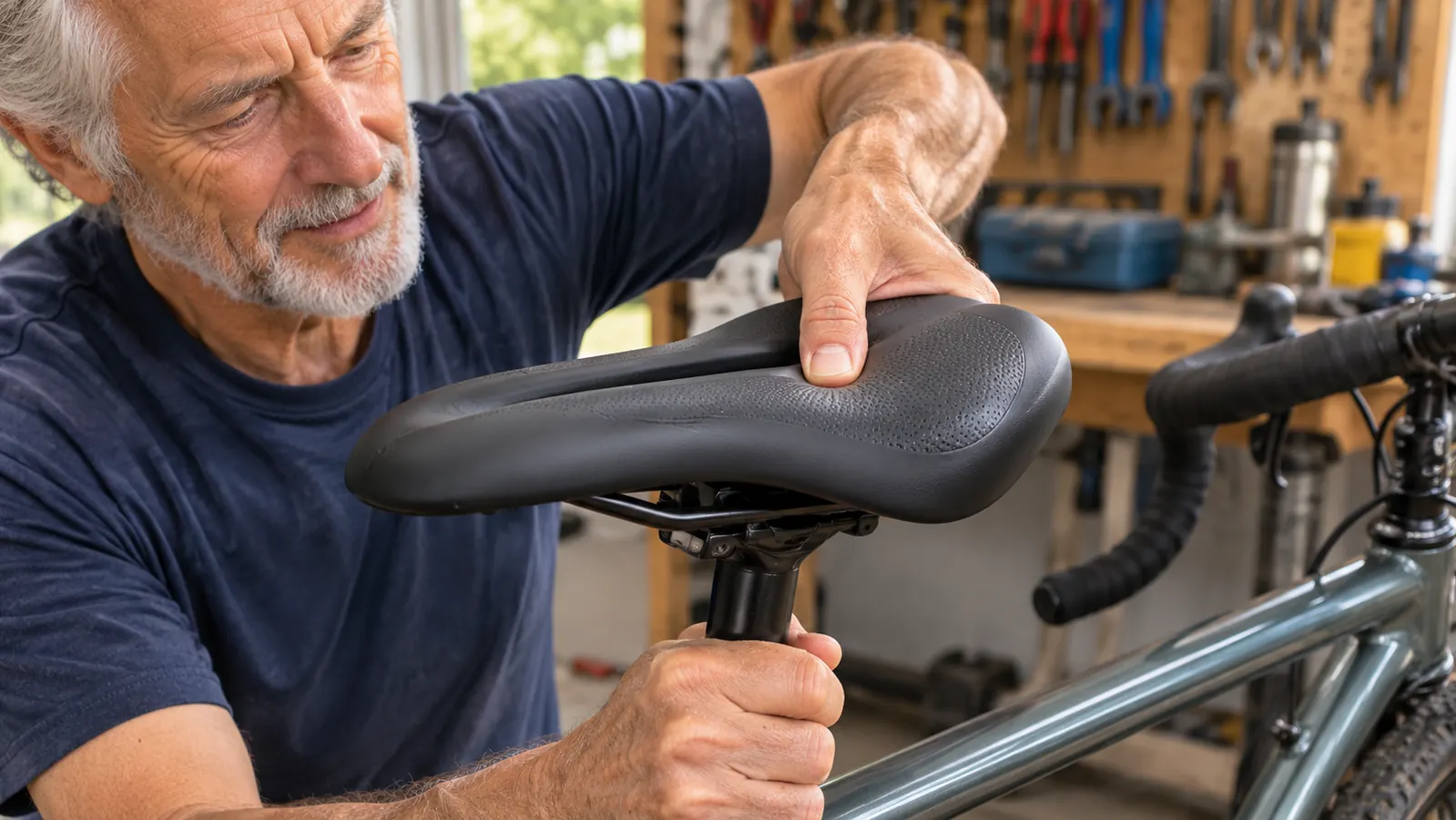
For the first week I did nothing but move the saddle. Up a few millimeters, down a few, nose up a touch, then back. I started with the height measured off the old saddle and that was wrong by a good half inch, because the Cambium is a different shape where your sit bones land. I dropped it about a quarter inch below that mark, then spent three evenings creeping it back up in eighth-inch steps until my hips stopped rocking on the climbs. The Cambium C17 has no break-in period, so there was no point waiting for it to soften into shape. Whatever it is on day one is roughly what it is on day 700, and that means the fit work is on you. Once I found the height and a tilt that was very slightly nose-down from level, I stopped thinking about it.
A typical week is two long days, 50 to 70 miles, plus shorter midday loops in winter. My longest single day is about 100 miles. My riding partner Ed is 70, a retired mail carrier, and he comes out on some of those days. The rest of the time I ride alone, which matters for a saddle review: there is nobody to notice you shifting around every ten minutes except you.
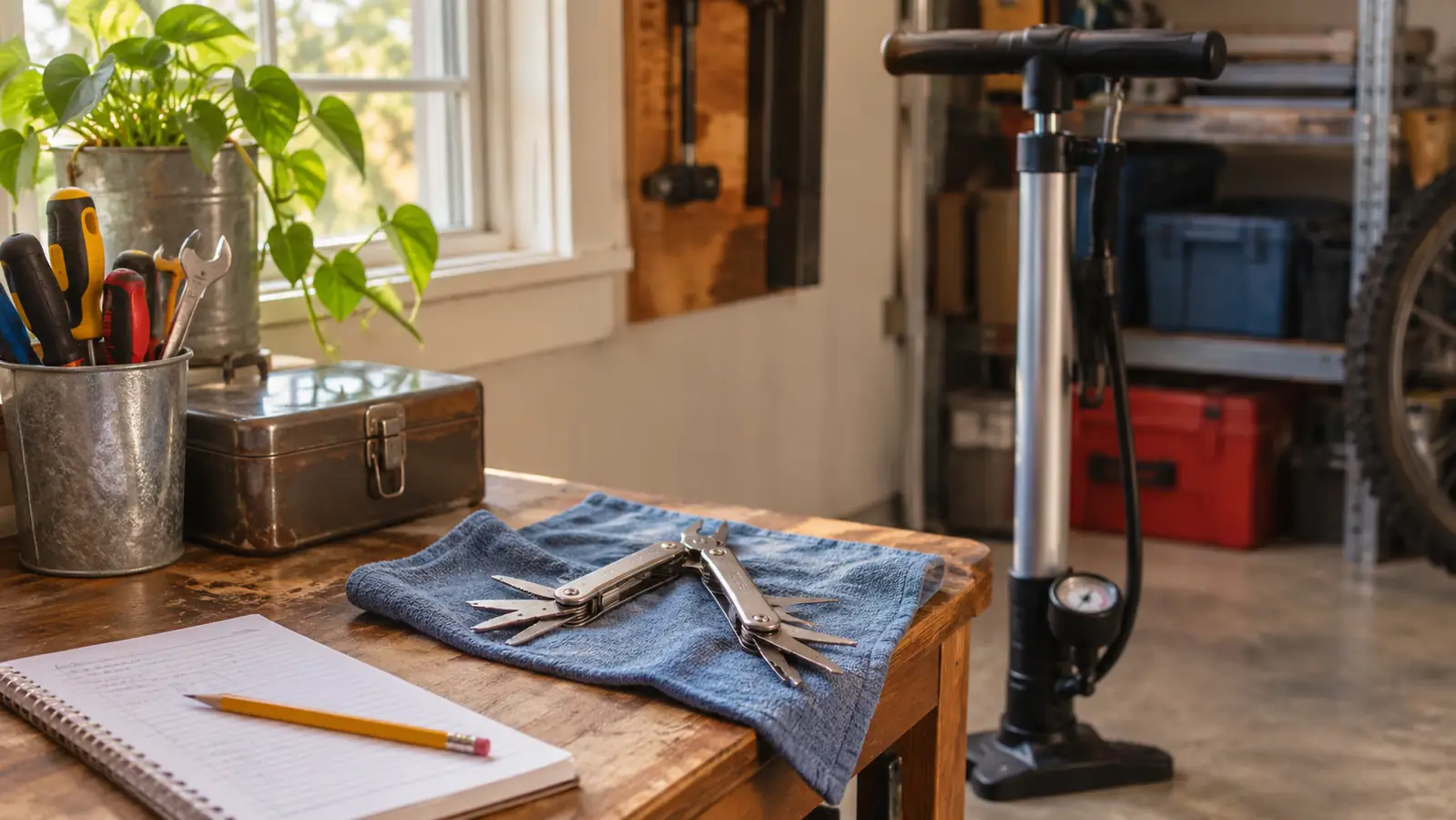
I keep a spiral notebook in the garage and I mark down the miles and anything that bothered me on the ride. That is a habit from 31 years of teaching shop, where if you did not write down what the machine did, you found out again the hard way. The saddle notes are short. Most weeks say something like "62 miles, no saddle note" and that is the highest compliment I have for a part.
What the Cambium C17 Carved Actually Is
The top is vulcanized natural rubber with an organic cotton canvas over it, plus a thin structural textile layer for resilience and a waterproof nylon cover. The listing puts it at about 450 grams, about 11.14 inches long, 6.5 inches wide, and 2.05 inches tall, rated to a maximum rider weight of 100 kg. Mine is the Carved, which means it has the center cutout. The warranty is two years from the manufacturer.
There is no leather here. That is the whole point of the Cambium line, and it is why I chose it over the leather saddles I had been reading about. No leather means no tension bolt to fiddle with, no Proofide, no covering it when the sky turns, and no six-month waiting period where you wonder whether you are breaking in the saddle or just enduring it.
The rubber top does flex. The listing calls it uniquely flexible and designed to follow the rider's movement, and after two years I would put it this way: it gives a little under your sit bones instead of sitting there like a board. That give is what makes it comfortable from the first ride. What it is not is soft. If you are coming off a wide padded saddle, the first thumb press will surprise you and you will think you made a mistake. I did. I remember standing in the garage holding it up to the light thinking I had just spent money on something that felt like a boot sole, and then riding 40 miles on it the next morning with no complaint at all.
How It Has Held Up Over Two Years
The honest answer is that it looks about the same as the day I bolted it on, minus dust. The canvas has darkened slightly where my sit bones land, the way a canvas bag darkens at the strap, and there are two faint polished spots on the rubber at the edges of the cutout. No cracking, no sagging, no separation between the canvas and the rubber, no loosening at the rails.
The weatherproofing claim is the one I can speak to directly, because I have not babied this saddle. The first rain ride was in April of the first year, a 55 miler out toward Chino Valley where the sky turned about twelve miles from home and did not let up. I got back, wiped it with a rag, and the canvas had not taken water the way fabric takes water. No swelling, no soft spot, no smell. It has sat in a cold garage through two Prescott winters, which is not the same as a wet climate but is not nothing. The nylon cover has done its job. If it had been leather, I would have been oiling it and covering it and thinking about it, and I did not think about it once.
No leather means no tension bolt, no Proofide, no covering it when the sky turns, and no six-month waiting period. I have not tightened a single thing on this saddle in two years.
The one thing that has changed is the surface feel, and only barely. It has gone from slightly tacky when new to smooth. That took about six months and it is an improvement, not a problem. I have never had it slip on me on a climb, and I have never had to scuff it up to keep from sliding forward on a steep grade.
The weight is real. At about 450 grams it is heavier than a race saddle by a good margin. On a steel touring bike that already carries a seat bag and a rider who is 67 years old, that difference is not something I can feel under me. If you are counting grams on a carbon frame, this is not your saddle and you already know that.
Fit, Width and the Center Cutout
At about 6.5 inches wide, the C17 is on the wide side for a road-ish saddle and that is deliberate. It is meant to support a rider sitting more upright, which is what a touring bike does and what a man with a stiff lower back ends up doing anyway. I am about 5 foot 10 and about 160 pounds. The width puts the support under my sit bones rather than between them, and that is the whole reason I can do 60 miles without standing up every eight minutes.
Before this I tried a narrow saddle borrowed out of a parts bin and a padded gel cover laid over the stock saddle. The narrow one put the load exactly where you do not want it, and about 20 miles was all I got before I turned around. The gel cover was worse in a different way: it felt fine in the driveway and turned into a wet sponge by the two-hour mark, shifting around under me on every climb. That is why I stopped trying to fix a saddle with a pad and started looking at shape instead.
The Carved version adds the center cutout, and for me that is the version to get. On long days in the heat, the kind of pressure a solid top puts on soft tissue is the thing that ends rides early. The cutout relieves it. I am not going to make a medical claim about what a cutout does or does not prevent, because I am a retired shop teacher and not a doctor. I will say that if numbness or sores are already a problem for you, see your doctor if it does not clear up, and do not expect a saddle to fix a fit problem that lives somewhere else on the bike.
My hands and my lower back still complain on long days. My left knee still speaks up on steep climbs. None of that got better or worse because of a saddle, and I would be lying if I said otherwise. What changed is that a specific kind of discomfort stopped being the reason I cut a ride short. That is a smaller claim than most reviews make. It is also the true one.
What I'd Change, and What I Compared It To
Two complaints, and neither is a dealbreaker. First, the firmness. I have watched two people press a thumb into this saddle, look at me, and say something like "that's it?" They expected foam. It is not foam, and if you need cushion rather than support, the Cambium will not give it to you and you should look elsewhere.
Second, the weight, which I have covered. That is the list. In two years I have not had a single thing loosen, tear, squeak, or need attention. For a man who keeps a notebook on what held up, that is the note.
Ed rides a Brooks B17 leather saddle on his bike. I have looked at it plenty in his garage and I have read the listings on both. The B17 is leather, it has a tension bolt, it wants attention, and by Ed's account it took a few hundred miles before it stopped being a conversation. He likes it, and he should. I did not want the maintenance and I did not want the break-in, and I have never regretted picking the rubber Brooks England saddle. That is a preference, not a verdict, and if you want the leather saddle that molds to you over years, the B17 is the one to read about instead.
One more note for anyone swapping saddles for the first time: keep the rails clean and check the clamp bolts with a proper hex key after the first couple of rides, because a saddle that creeps down a few millimeters over a month will make you think the saddle is wrong when it is the clamp. Mine settled once in the second week and has not moved since. The multi-tool in my seat bag has the 4, 5 and 6 mm hex keys I needed for it.
What I Liked
- Comfortable from the first ride, with no break-in period to endure
- No maintenance at all: no tension bolt, no treatments, no cover to carry
- Weatherproof nylon cover has handled rain and two cold garage winters
- Center cutout relieves pressure on long days in the heat
- Has held its shape, surface and rails over roughly 8,000 miles
Where It Falls Short
- About 450 grams, which is heavy if you are counting grams
- The top is firm, and a thumb press surprises anyone expecting foam
- The first week of height and tilt adjustment is on you, since there is no break-in to hide a bad fit
- Rated to a 100 kg maximum rider weight, which rules out some riders
Who This Is For
Riders who do long days on a bike with a more upright position, who want to stop thinking about the saddle, and who would rather not own a maintenance item. It suits the rider who is 50 or older and doing 40 to 70 mile days, who has a stiff back and wants support rather than cushion, and who does not want to oil anything. It also suits anyone who rides in weather and does not want to carry a saddle cover in a seat bag alongside the tube and levers.
If you are coming off the stock saddle that came on your bike and it is the reason your long rides end early, this is the most direct fix I know of, and it worked on the first ride rather than the twentieth. Two years and about 8,000 miles later I would buy it again without thinking about it. I would buy it in the first week of March again, too, because that gave me a whole season to get the position sorted before the long days started.
Who Should Skip It
Skip it if you want a soft saddle. Skip it if you are building a light bike and 450 grams offends you. Skip it if you are over the 100 kg maximum rider weight the listing gives, because that is a real limit and not a suggestion. Skip it if you want a saddle that molds to you over a season, because rubber does not do that, and a leather saddle is the right purchase instead.
And skip it if you are hoping a saddle will solve a problem that is not the saddle. If your numbness or sores do not clear up with position changes and time off, see your doctor if it does not clear up. A saddle is a part, not a treatment.
Two years, 8,000 miles, and nothing tightened: check today's price
The Cambium C17 Carved in the size and cutout I ride. Rated to 100 kg, about 450 grams, two year manufacturer warranty.
Amazon Check Today's Price on Amazon →