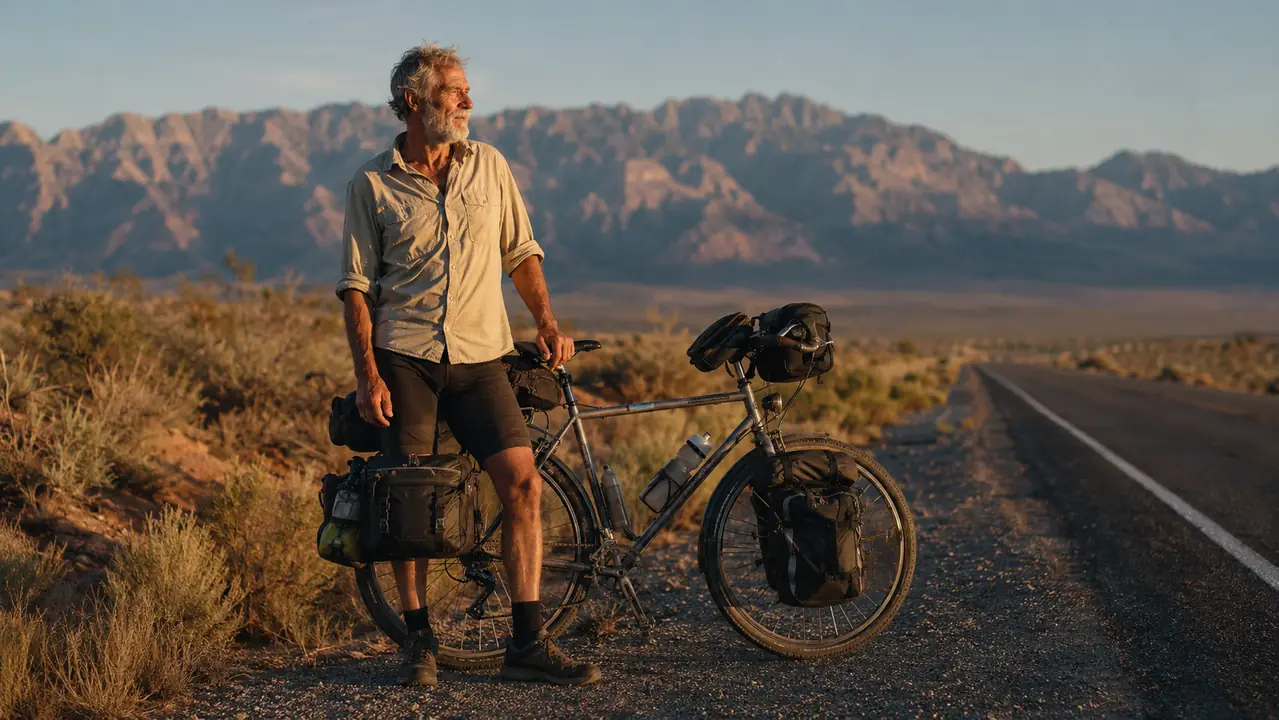
I have close to 8,000 miles on a Brooks England Cambium C17 Carved now. Two years of riding the roads out of Prescott, Arizona, twice a week when the weather allows, 50 to 70 miles a day with real climbing on most of them. Many of those miles were shared with a man on the other saddle in this comparison. Ed is 70, a retired mail carrier, and he rides a leather Brooks B17. We have had the same argument at the top of the same climbs for two seasons and neither of us has moved an inch. I am not neutral here. I bought the Cambium because I did not want to fuss with anything. But Ed's saddle does two things mine cannot do, and if I left those out you should stop reading me.
Here is the short version, and then I will show the work. The Cambium C17 Carved is the better saddle for a rider who wants the thing to work on the first ride and never ask for anything again. Vulcanized natural rubber with an organic cotton canvas top, a waterproof nylon cover over it, no break-in period, no tension bolt, no treatment to remember. The Carved version carries a center cutout. The B17 is the better saddle for a rider who wants leather molded to his own shape and does not mind spending a few hundred miles getting there. Both are Brooks England saddles and both are honest goods. They ask for different kinds of patience, and that is the whole of it.
| Brooks England Cambium C17 Carved | Brooks B17 leather | |
|---|---|---|
| Break-in | None. Comfortable the first week, with only height and tilt to adjust. | A few hundred miles before the leather takes your shape. |
| Wet weather | Vulcanized rubber under a waterproof nylon cover. Rides the same wet or dry. | Leather takes water, then wants a slow dry and fresh proofing. |
| Upkeep | Nothing to oil, proof or tension. | Conditioning, plus occasional tensioning as it stretches. |
| Pressure relief | Center cutout on the Carved version. | Solid top on the standard B17. |
| Shape over time | Holds the shape it started with, mile 2 or mile 90. | Molds to the rider and keeps that shape. |
| Service life | No adjustment. When the top wears through, it is finished. | Can be re-tensioned, and the top can be reconditioned. |
| Weight | 450 g, 15.68 oz according to the listing. | Heavier in the hand. |
| Best for | Riders who want to stop thinking about the saddle. | Riders who want a saddle that becomes theirs. |
Where the Cambium C17 Wins
The first place it wins is the one I care about most at 67: it does not need me. There is nothing on it to tension, oil, proof or dry out slowly. The top is vulcanized natural rubber and organic cotton canvas with a thin layer of structural textile for resilience, and a waterproof nylon cover over that, and the listing says plainly what I found on the road, that it works in all conditions. I have ridden mine through a cold rain south of Chino Valley and through a wet spring week when nothing on the bike dried out, and it felt the same at mile 40 as it did at mile 4. That week the bike came home wet four days running and I did nothing to the saddle at all. Ed's leather takes a soaking differently. He proofs it, he dries it slow and out of the sun, and he keeps an eye on it. He is welcome to that evening. I would rather have my feet up.
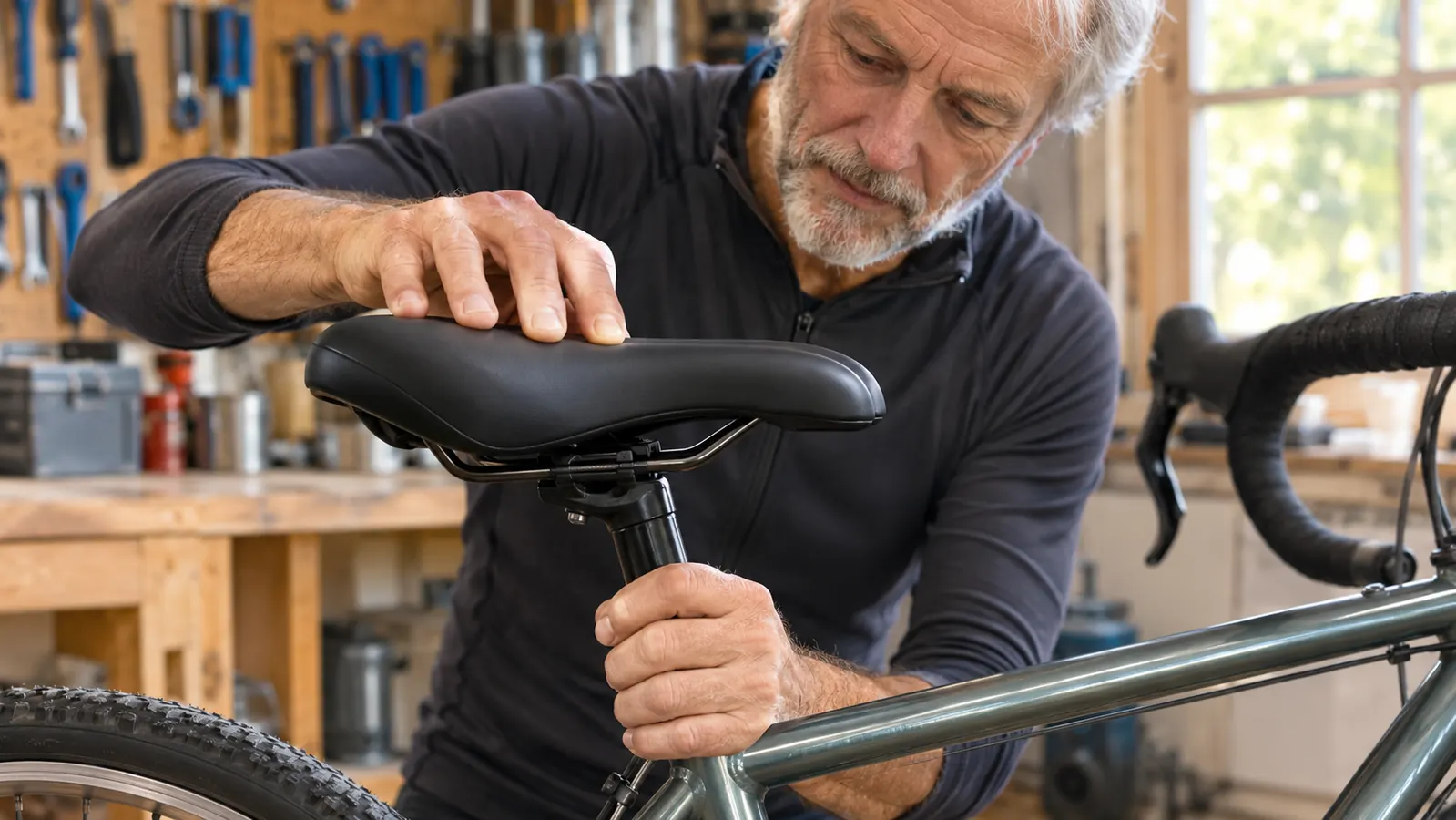
The second place it wins is the first week. I put the Cambium on the seat post, set the height, fiddled with the tilt for a few days, and rode. That was the entire break-in. There is no stretch where the saddle punishes you while it learns your shape, and that matters more than people admit once you are past 60 and a bad month off the bike costs you a whole season of fitness. I started with the top dead level, because that is what most riders do, rode 22 miles, and came home with pressure under my sit bones that told me the nose was sitting a touch high. I dropped it what felt like two degrees with a 5 mm hex, marked the height on the seat post with a strip of masking tape so I could find it again, and rode the same loop two days later. That was the whole of it. Two adjustments, one strip of tape, and I have not touched that bolt since. Two cautions, and I will give them straight. The top is firm, firmer than the foam most bikes ship with, and it surprises riders who expect soft. And the Carved cutout is the reason I chose this version over the solid one, because it takes weight off the middle on a long day. Neither of those is a sales line. They are the two things I would want told to me.
What it gives up is weight, and a number. The listing puts it at 450 grams, 15.68 ounces, on a saddle rated to a 100 kg maximum, and it measures about 11.14 inches long, 6.5 inches wide and 2.05 inches high. That is not a race saddle, and I am not a racer, so it costs me nothing at all. On a steel touring bike with 32 mm tires at 60 psi front and 65 rear, 450 grams is a rounding error. If you are counting grams on a climb, this is not your saddle and you already knew that before you opened this page.
Where the B17 Wins
Ed's saddle wins the long game on shape, and I will say so plainly because it is true. Leather takes the rider. After a few hundred miles a B17 has a shallow depression where the sit bones actually land, a shape no factory presses into rubber, and Ed's has had years to get there. When I follow him down a rough chip seal road, he sits stiller than I do. There is a stretch of chip seal on the way out toward Chino Valley that will shake a filling loose, and Ed goes across it sitting down while I am half out of the saddle. Some of that is the man and some of it is the leather, and I am not honest enough to claim I can separate the two. Mine holds the shape it started with, which is predictable and consistent and identical at mile 90 and mile 2, and that is not the same thing as molded to a body. If you ride the same bike in the same position for the next decade, that leather fit is worth real money and real comfort.
Second, the B17 can be kept alive. Leather stretches, and a tension bolt takes up the slack. A tired top can be reconditioned. Ed has had his for years and expects to have it for years more, and I believe him. The Cambium has nothing to adjust, which is the same fact told from the other side. When the top finally wears through, there is no repair, only a replacement. Brooks England gives it a two year manufacturer warranty, and after that you are on your own. I have not worn mine out in 8,000 miles and I do not expect to soon. But Ed's saddle is a thing you maintain and mine is a thing you use up, and that is a real difference, not a talking point.
The third thing, and this one is harder to put in a table, is that Ed knows his saddle. He has ridden it long enough that he can tell a quarter inch of tilt by feel in the first mile. That kind of familiarity is worth something, and you only get it by picking one and staying with it. I have the same familiarity with mine now. It just took me less time to earn it, because there was nothing to learn except where my own seat bones wanted to sit.
If you would rather ride than proof leather, this is the one
The Cambium C17 Carved needs no break-in, no tensioning and no treatment. Two years and roughly 8,000 miles on mine, and the only work it has asked for was setting the height and tilt in the first week.
Amazon Check today's price on Amazon →
The Details That Show Up After 8,000 Miles
Two years is long enough to learn what a saddle does and does not fix. The Cambium did what I bought it for: no sores, no numbness I had to think about, and no mornings where I dreaded the first ten miles. It did not fix my hands or my lower back on its own. That came from position on the bike, from padded shorts I finally broke down and bought, and from getting the tilt right, which took a week of small changes and a hex tool in the seat bag. Anyone who tells you a saddle alone solves a long day is selling something. A saddle removes one problem. It does not remove the others.
The clearest test came on a wet October ride, 60 miles with a steady drizzle and a lot of grit on the shoulder. It was 48 degrees and the rain never came hard enough to quit, which is the worst kind, and the grit came up off the shoulder and worked into everything. My top wiped clean with a wet rag in about ten seconds at the end of it. I finished on the same saddle I started on. Ed finished on a leather top that had taken water, and he spent part of his evening drying it and putting a fresh coat of proofing on before he would ride again. He still prefers his saddle. I still prefer mine. That tells you the whole thing is about which chore you are willing to do, and neither of us is wrong. A rider who is honest with himself knows which of those two men he is long before he spends anything.
One more detail for the riders in their sixties. The thing that ended my long days two and a half years ago was not the saddle. It was an 80 mile ride that left me sore, with a flat I fought for twenty minutes on the shoulder and a wrong turn on the way home. I blamed the saddle that came on the bike for a while, and it deserved some of that, but mostly I blamed a kit I had never thought through in my life. I replaced the saddle and the rest of my kit that spring because I wanted fewer excuses to quit, not because one part was magic. The Cambium is the part I would buy again first. That is a smaller claim than it sounds, and a more useful one.
Two years and roughly 8,000 miles, and the only adjustment I have made to the Cambium since the first week is none.
Who Should Buy Which
Buy the Cambium C17 Carved if any of this sounds like your week. You ride in weather and you do not want to think about what it is doing to your saddle. You are past 50 and a bad month off the bike costs you more than it used to, so you want something comfortable on ride one. You want a center cutout under you for the long days. You would rather not own a tension bolt or a tin of proofing. You are on a gravel or touring bike and you want the top to follow your movements instead of fighting them. Buy the B17 if you want a saddle that becomes yours, if the upkeep is part of the pleasure, and if you plan to keep one bike for the next fifteen years with the option to re-tension and rebuild. Both are good saddles from Brooks England. They are not interchangeable, and the choice says more about you than about them.
And one last thing, from a man who has made this mistake. Do not buy a saddle from a photograph. Ed and I ride the same roads at the same speeds on the same kind of bike, and we would each be miserable on the other's setup. The only way to know is to put miles on one. If you cannot borrow a saddle, buy the one that matches your patience, give it a fair month, and include a genuinely long day before you decide. The loop around town will tell you almost nothing. A 12 mile loop has never once told me anything true about a saddle, a tire or a pair of shorts. The 60 mile day with climbing in it will tell you in one afternoon what a month of short rides will not.
The saddle you stop thinking about
Vulcanized natural rubber with an organic cotton canvas top, a waterproof nylon cover, a center cutout, 450 g, rated to a 100 kg maximum. It works on ride one and it keeps working.
Amazon See the Cambium C17 Carved on Amazon →