Saddle sores do not come from one hard day. They come from the four or five ordinary days before it, ridden in shorts that quit doing their job a season ago. The pad goes flat, the fabric stretches, the seam that used to sit still starts to move, and by the time you notice, you are three hours from the truck.
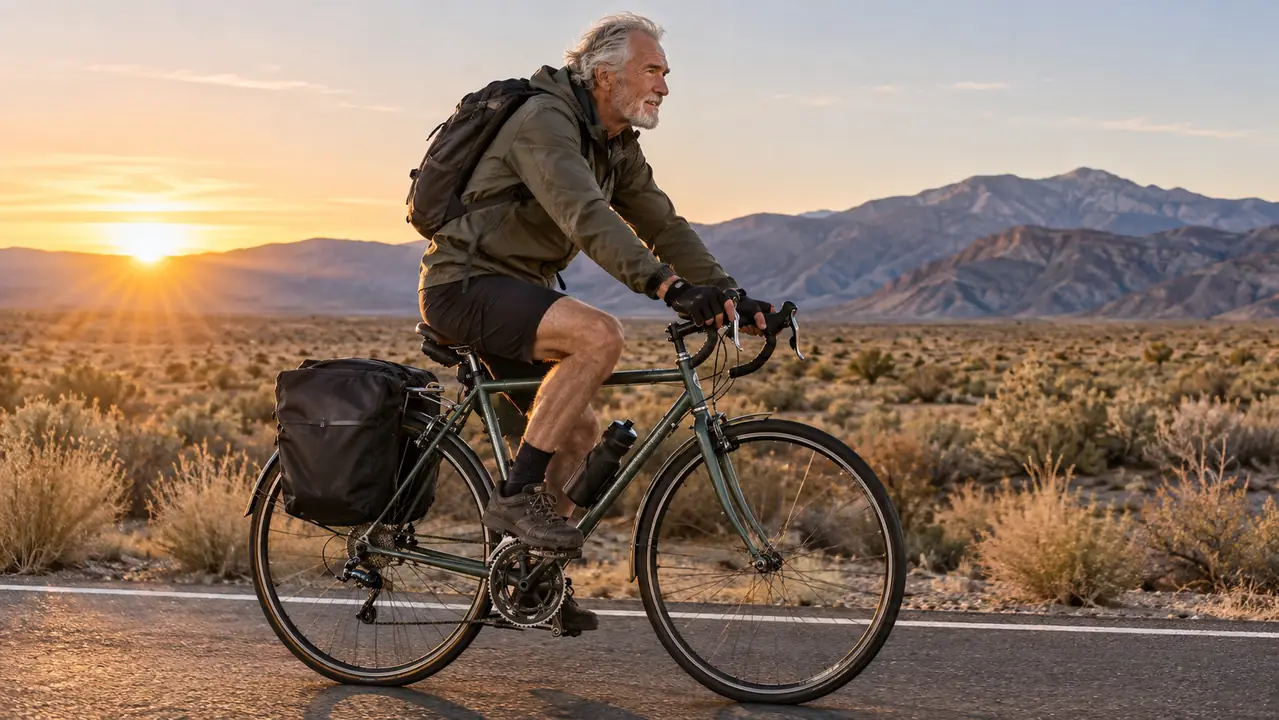
I am 67, I live in Prescott, Arizona, and I ride 50 to 70 miles twice a week from spring through fall, around 4,000 miles a year. Prescott sits at about 5,400 feet, so almost every route here has real climbing in it. About two years ago, in the first week of March, I replaced my whole kit after one bad 80 mile day left me sore and out of sorts. The piece I would replace first if I lost it is the Przewalski bib shorts. I own two pairs, size Large, and I rotate them. The pad is a 3D padded chamois, the fit is a regular fit, and after roughly 8,000 miles nothing on them has come apart.
This is not the review, though I wrote one of those too. This is the routine I actually follow before, during and after a long day to keep sores from forming, and where the shorts fit in it. It is the routine of a man who wrenches his own bike and keeps notes in a drawer, not of a coach.
The shorts I stopped thinking about around the third ride
Two pairs, size Large, washed cold and hung to dry, rotated through about 8,000 miles. The pad is a 3D padded chamois and the straps hold it where you put it. Honest note: it is a budget pair, and I say so.
Amazon Check Today's Price on Amazon →Step 1: Blame the Shorts Before You Blame the Saddle
Most riders I talk to go saddle shopping first. I did the same thing. A new saddle is a guess that takes money and three long rides to judge, and for all that it is usually not the problem. The pad is the thing sitting between you and the saddle for six hours. When it packs down, your sit bones take the whole load through a thin layer of foam, and the sore comes later that week, not that day.
Bibs beat waist shorts here, and it is not a close call. A waistband rolls and bunches under a jersey, and the pad slides forward every time you shift. Straps hold the pad up against you where it belongs. The Przewalski pair is a pull on bib in a regular fit, and the straps are the reason the pad is still in the same place at mile sixty as it was at mile ten.
Two honest complaints before you spend anything. On a short 20 mile loop, that pad feels like more than the ride needs. Not a fault, just something to know. And bibs are slower at a bathroom stop, because everything comes down instead of just the front. On a 60 mile day I will take that trade without thinking about it. On a quick weeknight spin, I notice it.
The pair I retired was a cheap waist short I had worn for three seasons. I laid it on the bench and put a straightedge across the pad at the widest point. It had gone from about a half inch of loft to something closer to an eighth, and the foam had gone hard at the edges where my sit bones land. Nothing had torn. It just quit. That is how pads fail on you, quietly, and why looking fine is not a test.
Step 2: Check the Fit at the Bench, Not at the Curb
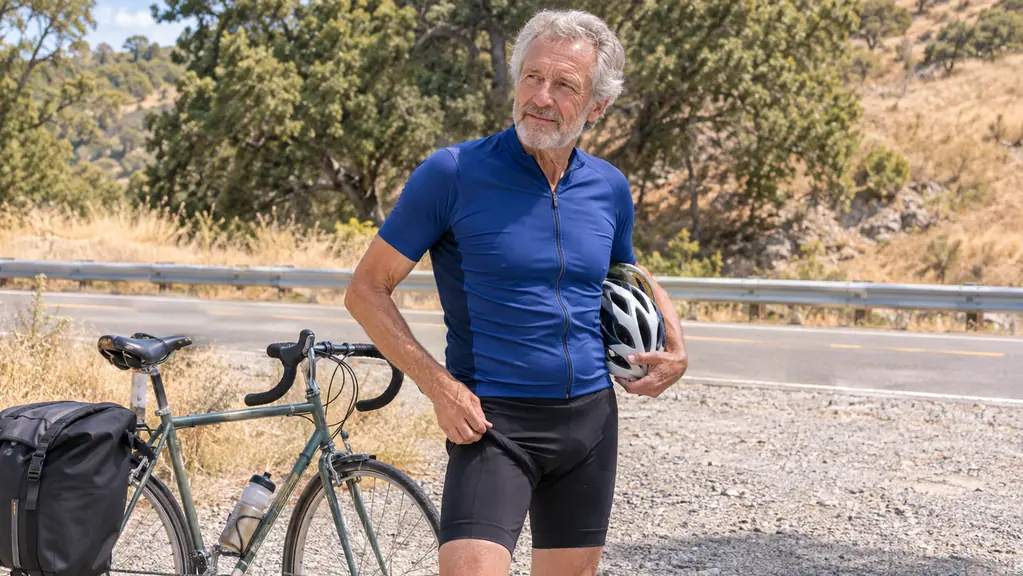
Fit is where most sore trouble is actually born, and I do not mean the size on the label. I mean the fit on the body. The pad should lie flat against you with no fold at the crease and no gap at the front. If it bunches when you are standing upright in the garage, it will bunch worse when you are bent over the bars two hours later.
I am about 5 foot 10 and about 160 pounds, and the Large is right on me. Before either pair ever saw a road, I put them on at the bench and did three things. Squat. Stand. Reach for the bars. If a strap digs into the shoulder, or the leg opening climbs past mid thigh after ten squats, the size is wrong, not the shorts.
Do that check the evening before, not five minutes before you roll out. These are pull on with nothing to adjust once you are dressed. What you put on in the garage is what you ride in for the next five hours.
I tried to solve fit with a smaller size first, and that was the wrong direction. A Medium pulled the pad tight against me and rolled the front edge under, and by mile fifteen the seam was doing exactly the damage I was trying to prevent. Snug is not the same as small. The shorts should feel like they are holding the pad still, not like they are compressing you into it. That mistake cost me a return and a week of short rides.
Step 3: Build the Miles Instead of Buying Them
The trouble two years back came from an 80 mile ride I had no business doing. That is the only genuinely bad day I have had on this bike, and I can still walk you through it. It was not one thing. It was the distance, the old shorts I owned then, a flat I fought with cold hands at the roadside, and a wrong turn on the way home that added six miles I did not have.
What I do now is boring. The first long ride of the season is 30 miles, not 60. The second is 40. By the fourth week I am back at my usual 50 to 70 and it feels like nothing, because the skin under me had four weeks to get used to pressure instead of one afternoon.
I am not a coach and I am not handing out a training plan. I am telling you that the day that wrecks a season is usually a jump, not a distance. Ride the short loop twice before you ride the long one once.
Here is the arithmetic of that day. I had ridden 40 miles twice in the month before it. Then I went out and did 80, with climbing, in shorts that were three seasons old, and I paid for it for nine days. Nine days off the bike in September, which is the best month we get here. I have not made that jump since. If I want to ride 80, I ride 50 twice in the same week first and see how the skin feels.
Step 4: Two Pairs, Cold Water, No Dryer
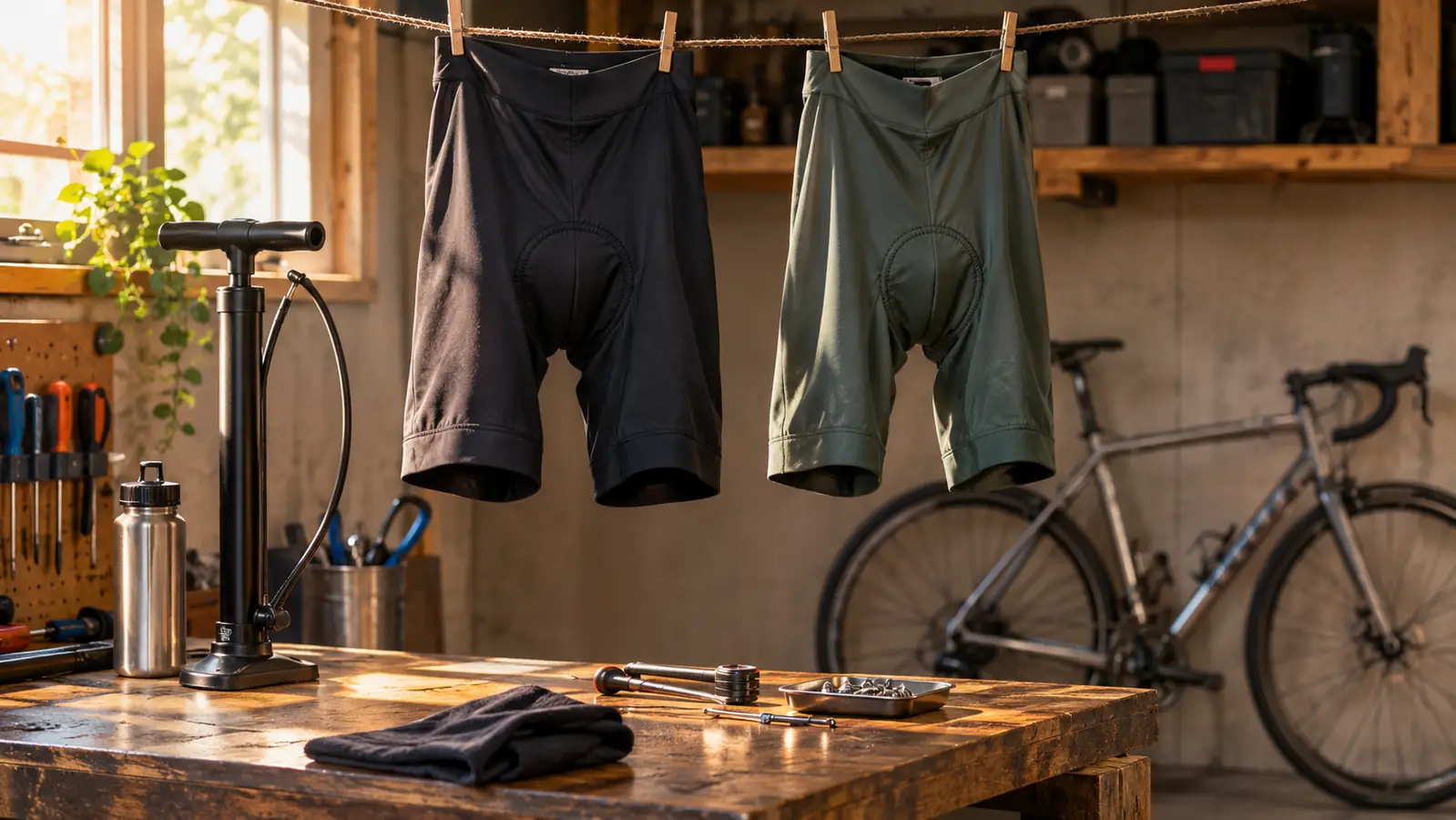
Two pairs is the whole system. One is on me, one is clean and dry on the hook in the garage. I wash them cold after every ride, no fabric softener, and I hang them to dry. The dryer is what kills a pad. Heat and tumble turn a 3D chamois into a flat piece of foam faster than any amount of miles will.
I have ridden these two pairs for about 8,000 miles, rotating, and the pads still hold their shape. That is the whole argument for buying two of a budget pair instead of one expensive pair. Wear is what ends a short's working life, and two pairs split the wear in half while guaranteeing that one is always dry.
Change out of them as soon as you are home, too. Sitting around in a damp pad for an hour after the ride is the cheapest way to earn a sore you did not have at the top of the last climb.
My wash routine is not fancy. Bucket of cold water in the utility sink, a squirt of plain detergent, knead it for a minute, rinse until the water runs clear, then roll it in a towel and press the water out. Then the line in the garage. Two pairs means I am never waiting on laundry to ride, which matters more than people think, because the temptation to ride a damp pair is real and riding a damp pair is how you get a sore that has nothing to do with mileage.
Step 5: Deal With a Hot Spot the Same Day
A hot spot is a warning, not a fact of life. If you feel a sting at mile 40, do not wait until mile 65 to think about it. Stand more, shift around, and finish easier than you started. The next day matters more than the last ten miles of this one.
At home: cool shower, dry the area, loose clothing, and do not ride the same spot two days running. If a sore is open, hot to the touch, spreading, or does not clear up in a few days, see your doctor. I am not a doctor and I do not play one in the garage, but that advice has never once been wrong for me.
I keep a small notebook in the bench drawer. Date, miles, which shorts, weather, and one line about how I felt at mile 50. Two years of those notes told me more about my own body than anything I have read, and it is how I know the shorts work for me at 60 miles while the saddle tilt matters more than I expected.
I also quit riding two long days back to back. Saturday and Sunday both at 60 was fine at 62 and is not fine now. One long day, one easy day, is what my skin and my lower back agreed to. Ed, who is 70 and retired from the mail route, does the same thing and neither of us thinks of it as training. It is just the pace that lets us keep doing this into our seventies.
Two pairs, size Large, rotated for about 8,000 miles. The Przewalski shorts are the one piece of kit I have stopped thinking about.
What Else Helps
The saddle matters, once the shorts are handled. Mine is a Brooks Cambium C17 Carved, vulcanized natural rubber under an organic cotton canvas top with a center cutout. About 450 grams, about 6.5 inches wide, rated to 100 kg. No break-in period and no maintenance, which suits me. It was comfortable from the first ride, though I spent that first week fine tuning height and tilt a quarter inch at a time, one change per ride, because changing two things at once teaches you nothing.
Standing up now and then is free. On a long day I coast out of the saddle for ten seconds every so often, whether or not the road asks for it. It moves pressure off the same two spots and lets the blood back in. Hands and back get the same treatment from the same habit.
Tire pressure is part of comfort, not just speed. I run 32 mm tires with tubes, about 60 psi front and 65 rear, and that is my setting for these roads, not a rule for you. I top them up before every ride with a Topeak JoeBlow Sport III in the garage. Analog 3 inch gauge on the barrel, reads to 160 psi, TwinHead DX5 head that fits Presta and Schrader, and no digital anything. Guessing pressure by squeezing the tire is how I spent my first three years, and I do not miss it.
Some riders use a chamois cream and swear by it. I have not needed it since the shorts changed, and I would rather fix the fit than add a product. If you try it, try it on a short day first, the same as everything else. And if a sore develops anyway and will not settle, see your doctor. That is not a line I add to be safe. It is what I do.
If you only replace one thing before the season starts
The pad is the part that touches the saddle for six hours. Two pairs, rotated, cold washed, is what carried me through 8,000 miles and a lot of climbing at 5,400 feet.
Amazon Check Today's Price on Amazon →