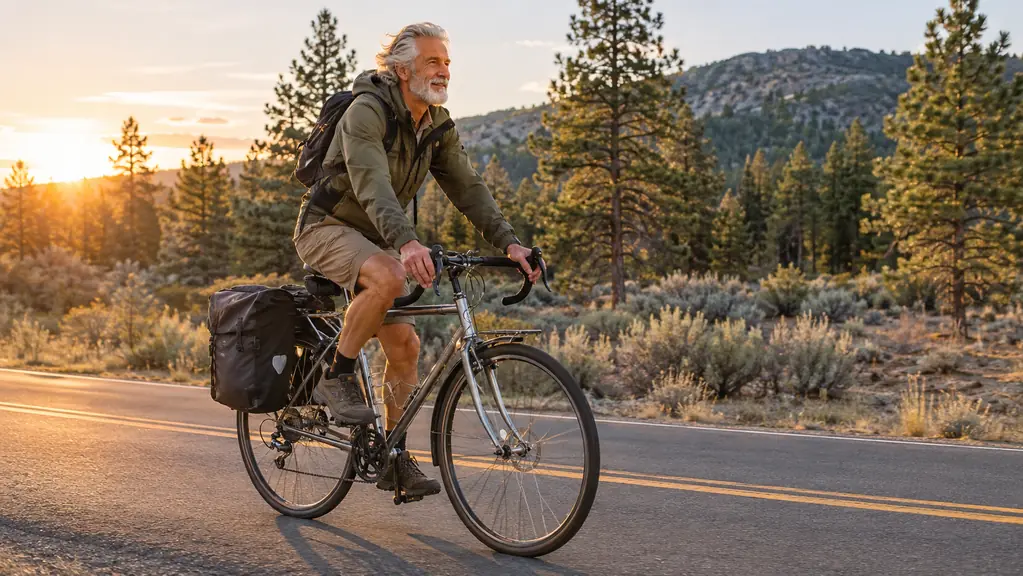
I bought the Przewalski bib shorts in the first week of March, two years ago, in the same order as four other things I will get to. Two pairs, size Large. I am 67, I taught high school shop for 31 years, and I ride a steel touring bike on the roads around Prescott, Arizona. Before that March I had never owned a bib short in my life. I had plain padded shorts with a waistband, the cheap kind, and I figured that was as good as it got.
Here is what nobody tells you when you buy your first pair of bibs. The shorts are the easy part. The hard part is admitting that the waistband pair you have been wearing since you retired is part of why a long day hurts. I did not want to admit it. I bought these because one 80 mile ride the previous fall left me sore from the saddle up, and because I had decided to stop guessing at things I could measure instead.
The Quick Verdict
A budget bib that did its job on my first long ride and kept doing it for two years and about 8,000 miles. The chamois is more than a short ride needs and the finish is plain. I would buy them again.
Amazon Check Today's Price →The pair that got me through my first 60 mile day
Two pairs, size Large, in rotation for two years. If you are moving off waistband shorts and want to find out whether bibs help before spending much on the answer, this is where I started.
Amazon Check Today's Price on Amazon →How I've Used Them
Two years now, about 8,000 miles, two pairs in rotation. My week is 50 to 70 miles twice, spring through fall, and shorter midday loops in winter. Prescott sits at about 5,400 feet, so almost nothing here is flat and the climbing is real. I am about 5 foot 10, about 160 pounds, with a stiff lower back, hands that complain on long days, and a left knee that has opinions about steep grades.
The first long ride in them was a 62 mile loop out past Chino Valley and back, the second week of March, still cold enough that I wore knee warmers. I remember the number because I wrote it down in a spiral notebook I keep on the bench, with the date, the miles, and one line about how the body felt afterward. That notebook goes back about five years now, to the spring I started riding long at all. The line for that day says the saddle was not the problem. That is the first time I had written anything like it.
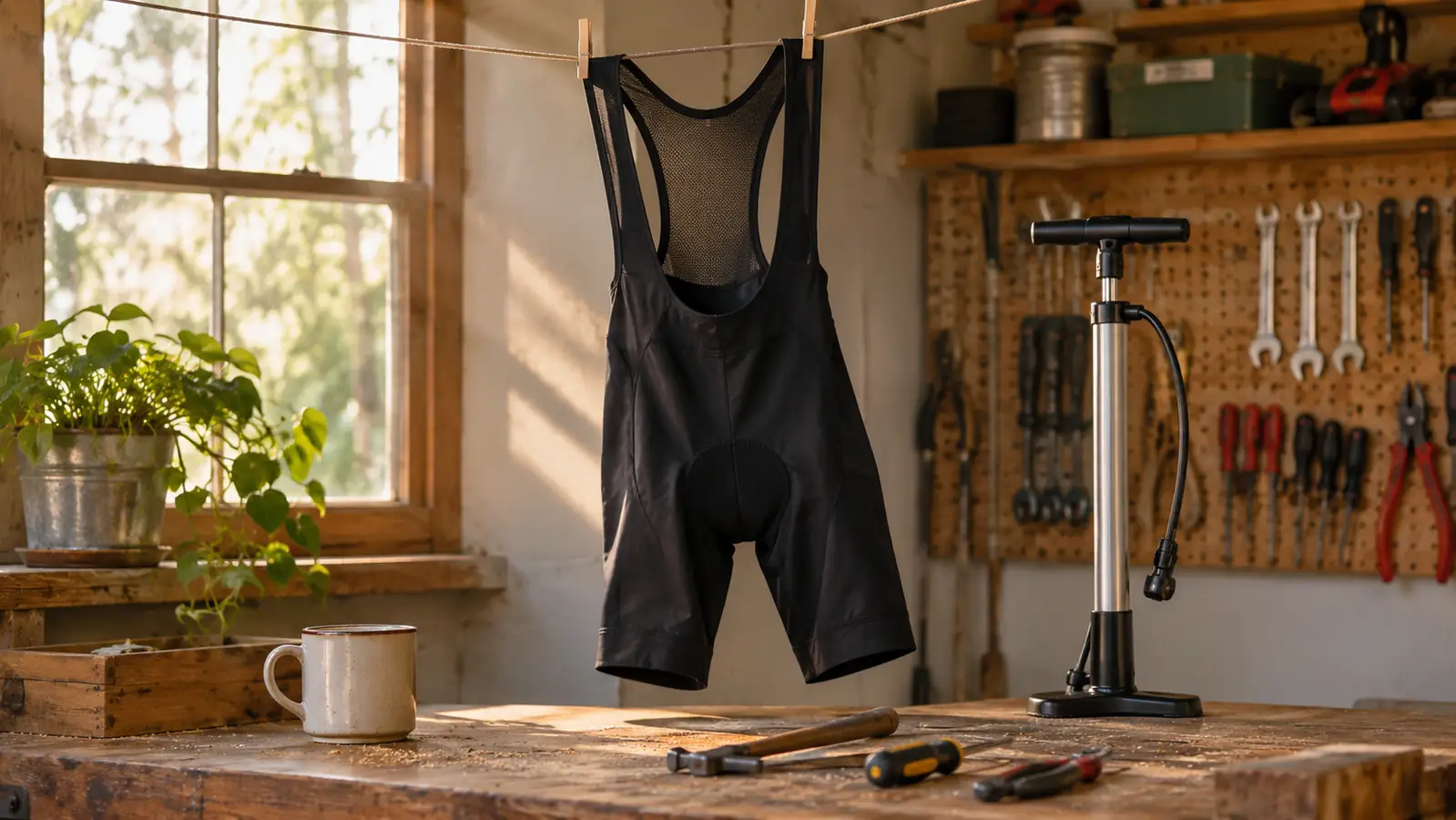
I wash them cold in the machine and hang them to dry over the garage bench. That is the entire routine and it has not changed in two years. The listing puts a pair at 4.96 ounces. I have never set one on a scale, but they are light enough that I forget I am wearing them until I sit down somewhere.
The first long ride in them was the first long ride where the saddle was not the thing I was thinking about at mile 50. That is the review in one sentence. Everything below this is detail, and some of the detail is not flattering.
What Nobody Tells You About the Chamois
The pad is a 3D padded chamois, which is what the listing says and about all it says. What I can tell you is how it behaves. On 50 and 60 mile days it does the job it is there to do. On a 15 mile loop around town it feels like too much, and I have caught myself reaching for the old waistband shorts for a quick errand ride. That is not a fault in the pad. It is a mismatch between the pad and the ride.
The day that settled it for me was a 68 mile ride that May, with roughly 3,800 feet of climbing in it, the kind of day where you spend more time going up than you planned. The pad was still doing its job at mile 55, and by then my back had quit arguing and my hands were the loudest complaint I had. I am not going to tell you I finished fresh, because I did not. I finished. The part of me that hurt was above the waist, and for a man with a stiff lower back that is the right outcome.
The other thing about a pad this size is drying time. Hanging them overnight in a garage in February is not the same as hanging them in July. In the cool months I give them a full day before they go back in the drawer. If you ride every day and own one pair, plan around that, because a damp chamois at mile 20 is a misery you can avoid with a second pair.
The chamois has also compressed in two years. Not gone, not flat, but softer than new. The older pair, which has to be somewhere around 4,000 miles, is a touch softer than the newer one, though it has not gone flat. I expect one more season out of the old pair, and then it becomes a short ride pair and the newer one carries the long days. That is the honest arithmetic of a budget bib.
Fit, Straps, and the Small Pocket
The listing calls the fit regular, mid rise, pull on, and that is what arrived. It is not a race cut. I have a normal build and the shoulder straps do not pinch on a long day, which is more than I can say for a pair of suspenders I owned in my thirties. I am not going to describe a gripper band, because I did not measure one and I am not going to make something up. I will tell you the legs stayed where I put them on a 70 mile day.
There is a utility pocket. It is small, it is not a seat bag, and I would not put a phone in it. A house key goes in and comes out fine. Mine has had the same key in it for two years and I have never once thought about it, which is the highest compliment I can pay a pocket.
The straps are the part I worried about before buying, because I had read plenty about cheap bibs failing at the shoulder. Two years in, the straps are the part that has held up best. They are wide enough that they do not saw into me, and the front does not gap when I am bent over the bars on a climb.
Two Years of Wear, Honestly
The seams at the pad have held. The fabric at the straps has held. What has gone first is the chamois at the sit bones, which is exactly where I would expect it to go. No blowout, no seam opening on the road, no ride cut short. For a budget pair used about 4,000 miles a year, that is a fair record and I am not going to dress it up.
I check seams twice a year now, in the fall when I put the warm stuff away and in the spring when I get it back out. I do it at the bench with a work light and my reading glasses on, pulling at the fabric around the pad and at the leg opening to see whether anything is letting go. Two years of that and the only thing I have found is the softening at the sit bones. No stitch has opened. No fabric has gone thin enough to see the light through it.
The second wear item is shape. The pad has taken the shape of me. A new pair feels unfamiliar for two rides and then it does not. That is not a defect in the shorts. It is what padding and fabric do over a couple of thousand miles, and it is the reason a broken in pair feels better than a fresh one for the first week.
I have not had a saddle sore in these. I want to be careful with that sentence, because it is one man and one set of circumstances. If you get sores, or numbness that does not clear up in a few days, that is a conversation with your doctor, not a reason to go buy a different pair of shorts and hope.
The first long ride in them was the first long ride where the saddle was not the thing I was thinking about at mile 50.
The Bathroom Stop Problem
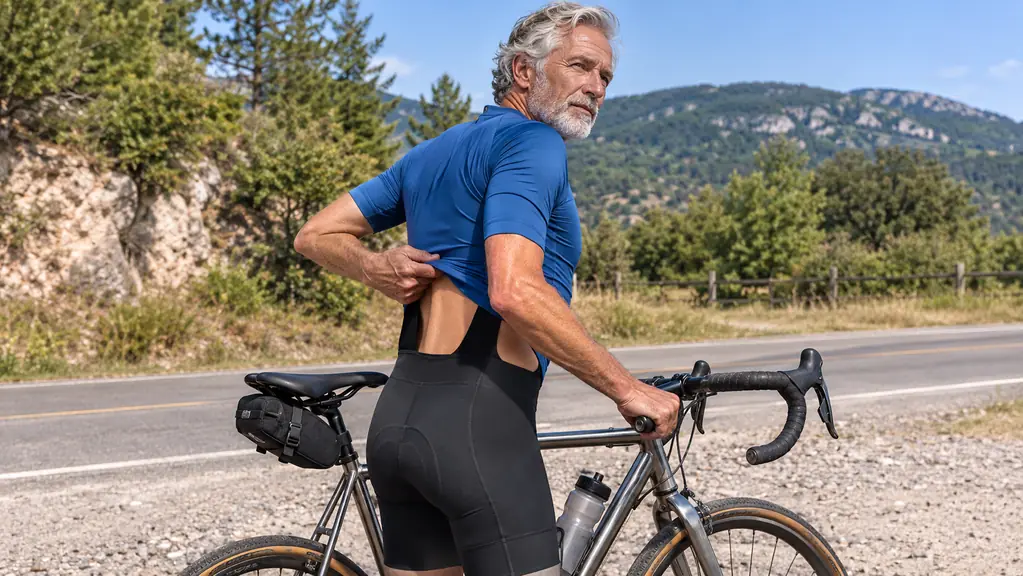
Nobody mentions this and everybody should. With a waistband short you stop, you drop, you go. With a bib you take the jersey off first, or you thread the straps down under it, and either way it takes longer and it is awkward at a gas station outside Chino Valley with a truck idling behind you. On a 60 mile day I stop once. On a 70 mile day, maybe twice. Two years in, I have it down to about a minute. It is still longer than it used to be.
It is worse in the cold, and I will tell you why. In July I am in a jersey and shorts and nothing else. In February I have arm warmers, a vest, and gloves on, and every one of those has to come off or be pushed out of the way before the straps will come down. The first cold morning I tried it, I stood at the shoulder of the road for three minutes fumbling with a glove and cussing quietly. Now I do the gloves last and it runs about ninety seconds. Same job, less flailing.
If you ride in a group and everyone stands around waiting for you, you will feel that minute in a way I do not. If you ride alone a fair amount like I do, it is a small tax and not a reason to stay in waistband shorts. It is also the one thing about bibs that no amount of practice fixes. It only gets faster.
Where They Are Built Like a Budget Pair
These are a budget pair and they fit like one. The fabric is not the fabric of a much more expensive bib. Ed, my riding partner, wears Pearl Izumi Quest bibs, and I have felt the difference with my own hand in his garage. His are denser. Mine are lighter, and on a hot afternoon in June I am not convinced his density is the advantage. Neither one is automatically better. Just do not buy the Przewalski pair expecting the finish of a much more expensive one, because you will not get it.
The details show it. There is no trim. The stitching at the leg opening is plain. The label is plain. The seasons listed are spring, summer and autumn, and I would agree with that, because I ride these in the heat and I ride them in the shoulder months, and I put them away when the morning temperature is near freezing. Nothing has failed on me, but nothing about it says custom. That is the trade, and for a first pair of bibs it was the right trade for me.
The Rest of What I Bought That March
The bibs were one of five things. I also replaced the stock saddle with a Brooks Cambium C17 Carved, replaced a loose handful of Allen keys with a Crankbrothers M19, replaced a garage floor pump whose gauge had quit with a Topeak JoeBlow Sport III, and bought my first GPS computer, a Garmin Edge 540. The pattern was the same for all five. I had been getting by with things that worked well enough that I never thought about them, until one bad ride made me think about all of it at once.
Two years later, the bibs are the purchase I would repeat first. The saddle is a close second. That is not a knock on the tool or the pump. It is that the shorts touch you for every mile of every ride and the pump sits in the garage. When my daughter Beth asked what a new rider should buy first, I told her shorts before gadgets, and I still think that is right.
Sizing and Care, Since You Asked
I am about 5 foot 10 and about 160 pounds and size Large is what I wear in the Przewalski bibs. It is a regular fit, so there is room through the middle without flapping, and the straps are long enough that I am not hunched. If you are between sizes and you want a snug fit for long days, I would not size up. If you are wider through the chest and shoulders than I am, that is a different conversation and I cannot help you with it from here.
What I did before ordering was take the cloth tape out of the bench drawer and write my waist and my chest on a scrap of paper, then hold that against the size chart on the listing until the two agreed. It sounds fussy. It took four minutes and it saved me a return, and I have returned plenty of things in my life by guessing instead. That scrap of paper is still pinned above the bench, though by now I know the numbers without looking.
Care is cold wash and hang dry. I have put them through the machine with the rest of the riding clothes for two years and the only thing that has worn is the pad, which would have worn anyway. I do not use fabric softener on them, mostly because I do not use it on anything. I do not dry them in the machine. Heat and elastic do not get along, and I have ruined enough things in my life to know better by now.
Who This Is For
This is for the rider coming off waistband shorts who wants to find out whether bibs actually help before spending much on the answer. If you ride 30 to 70 miles a few times a week, if you are carrying some age in your back and hands, and if you would rather have a plain pair that holds up than a finished pair you are afraid to wash, these are a sensible place to start. They are also a reasonable second pair for someone who already owns a good set and wants a spare for back to back days. That is close to how I use mine now.
Who Should Skip It
Skip these if you race, if you want a tailored cut, or if you ride mostly short loops where the chamois is more pad than the ride needs. Skip them if you cannot live with the bathroom stop routine, because that does not get better with practice, it only gets faster. Skip them if you want one pair that will last a decade, because the pad is the first thing to wear and it has started to soften on my older pair. Ed's more expensive bibs are a better answer for some of that. Mine are the cheaper answer that worked, and I would rather tell you which one I actually own.
What I Liked
- Did the job on my first long ride and has held up for two years and about 8,000 miles
- Shoulder straps have not stretched or pinched, which is where cheap bibs usually fail
- Legs stayed put on a 70 mile day with no adjusting
- Light enough at 4.96 ounces that I forget I have them on
- Small utility pocket holds a key and stays out of the way
Where It Falls Short
- Chamois feels like more pad than a 15 mile ride needs
- Pad at the sit bones softened a touch by about 4,000 miles
- Bathroom stops take longer than waistband shorts and always will
- Plain finish, no trim, and the fabric is clearly a budget fabric
Two years and about 8,000 miles later, I would buy them again
Size Large, two pairs in rotation, washed cold and hung to dry over the bench. If you are past 50 and moving off waistband shorts for the first time, this is the pair I started with and the one I still ride.
Amazon Check Today's Price on Amazon →