The first long ride I took after retiring ended with me standing at a fork in the road, holding a paper cue sheet that had gone soft with sweat. I picked the wrong branch. Two hours later I was eleven miles from my truck, with a flat I could not fix and a phone at nine percent. That day I decided my navigation had to stop depending on paper and on a phone I was already using for everything else.
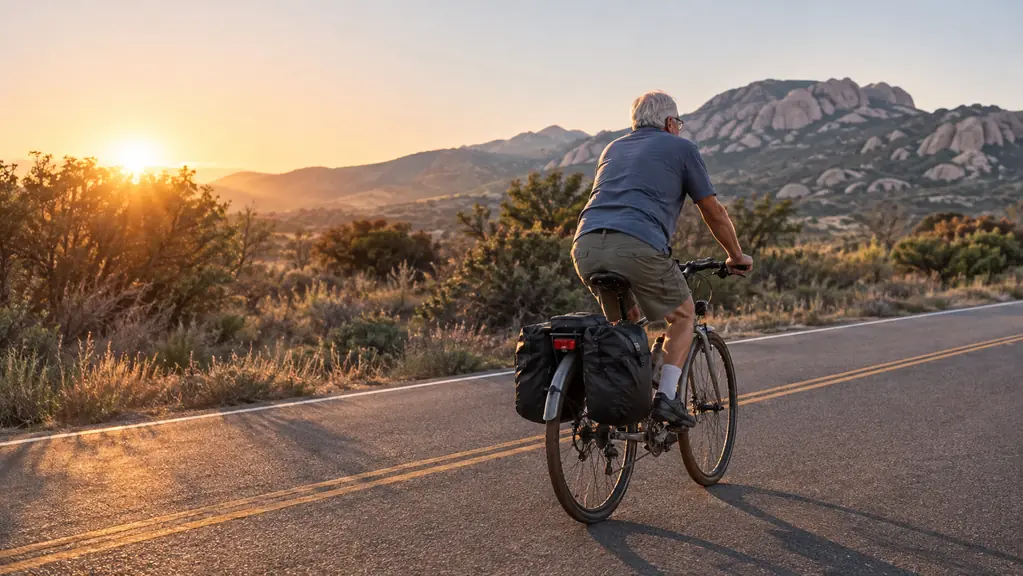
I am not a racer. I am sixty-seven, I live in Prescott, Arizona, and a long day for me is fifty to seventy miles with real climbing in it. I bought a Garmin Edge 540 about two years ago, in the same week I replaced the rest of my kit, and I have put roughly eight thousand miles on it since. What follows is not a spec sheet read aloud. It is ten reasons the thing earned its place on the stem.
Stop guessing which way the road goes
The Garmin Edge 540 is the computer I bought after that bad day, and the one I am still riding with two years later.
Amazon Check today's price on Amazon →It tells you how much climbing is left, not just how steep this pitch is
Prescott sits at about 5,400 feet, so nearly every route I ride has a climb in it somewhere. On a paper map I could see that the road went up. I could not see how long the up lasted. ClimbPro shows the remaining ascent and the grade on the climb I am on, which changes how I pace the first half of a long day. When I can see there is another mile at that pitch, I stop burning energy I will want at mile sixty. That one line of information has done more for my knee than any gadget I have owned.
The battery lasts longer than I do
Twenty-six hours is the number Garmin lists for demanding use, and forty-two with battery saver turned on. My longest day is about a hundred miles and it takes me most of the daylight. The computer has never come close to running out. I charge it after every ride out of habit, not out of need. If you have ever watched a phone die at mile sixty while it was your only map, you already know why this matters more than any other number on the box.
The buttons work with cold hands and gloves on
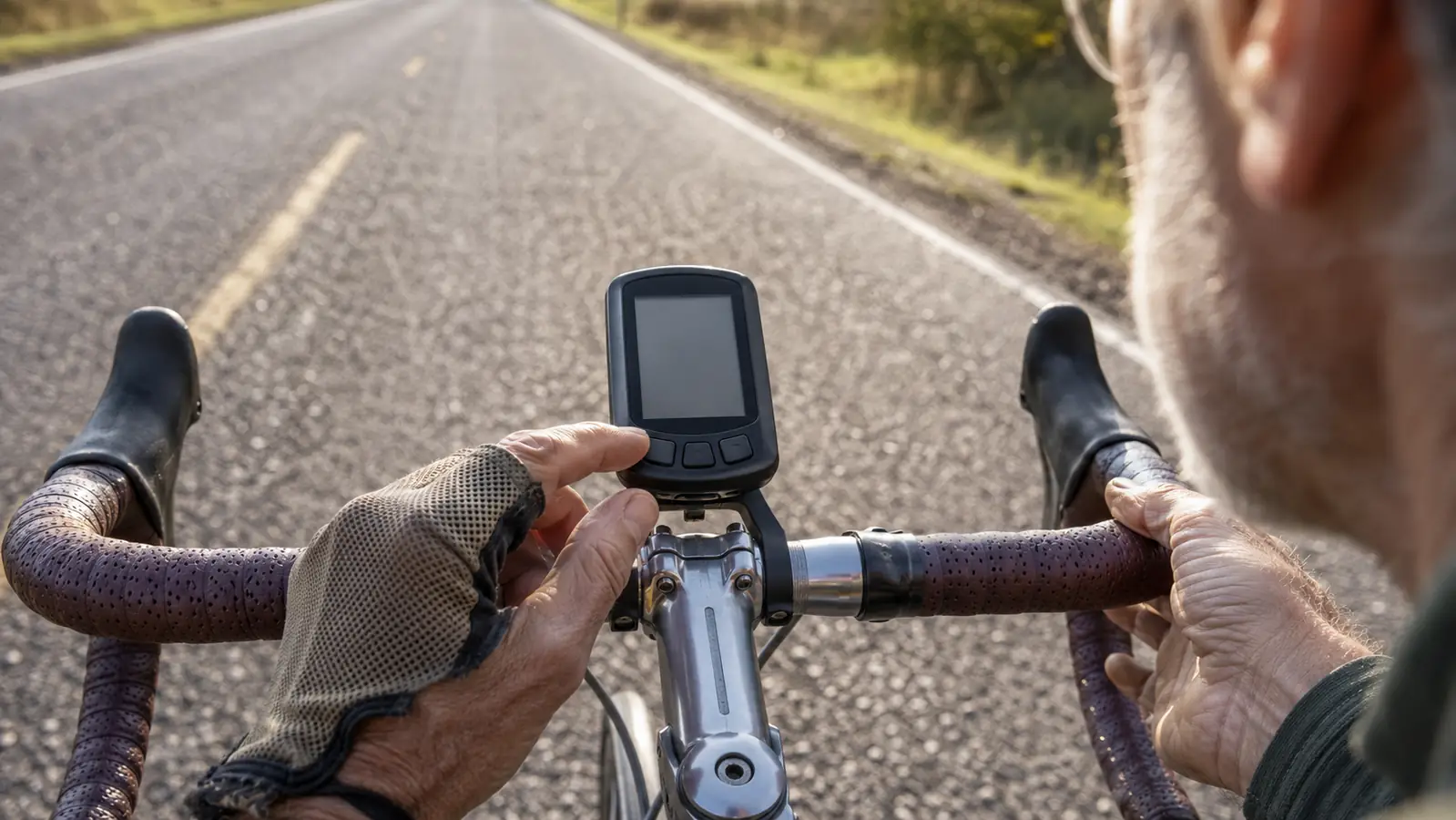
This unit is push button, not a touchscreen. I did not think that was a selling point until the first forty degree morning in March, when my fingers were stiff and I needed to change a screen. A button pushes. A touchscreen under a glove on a cold hand does not, or it does it eventually. The trade is that button menus are slower to learn, and I will not pretend otherwise. Two weekends of poking at it in my driveway got me most of the way there.
A route loaded the night before ends the wrong turn problem
The evening before a long ride I sit at my desk, put the route together on my home computer, and send it over to the Garmin. In the morning it is there, and the screen shows the line and shows me on it. That is the whole fix for the problem I described at the top of this page. I still carry a paper backup in the seat bag, but I have not needed it since. The maps cover North America, which is more range than I will ever ask of it.
You can read it in direct sun without squinting
The screen is 2.6 inches with a resolution of 246 by 322, and it is a color LCD. That is not a big screen, and I am not going to sell it as one. What it is, is bright enough to read in full sun, which my phone is not once it dims itself to save battery. I can glance down and get the number I want in about the time it takes to check a wristwatch. The honest caveat for older eyes is that without my readers I have to hold that glance a beat longer than I would like.
Your phone stays in your pocket where it belongs
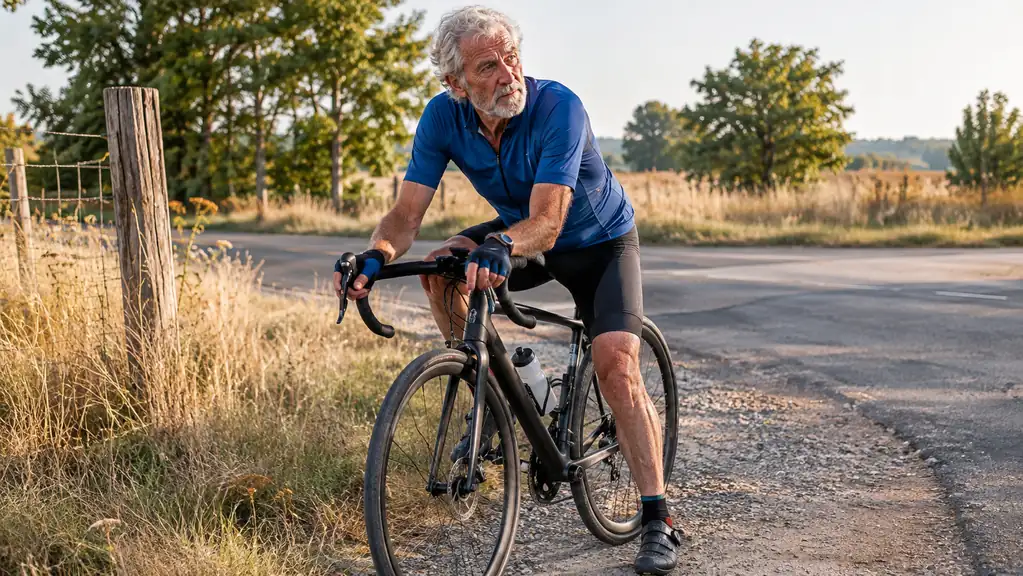
Before this I ran a phone in my jersey pocket and used it for maps, messages, and the camera. By mile fifty it was warm and tired and I was rationing it. Now the phone stays put and the Garmin handles navigation and recording. It pairs to the phone over Bluetooth, so the ride goes where it needs to go once I am home. But nothing during the ride depends on the phone being awake, and that is a different kind of peace than I had before.
The mount comes in the box
Small thing that is not small. The stem mount was in the box. I bolted it on at the bench in my garage with an Allen key and it has not moved in two years, including some rough chip seal out on the Chino Valley roads. I did not have to order a bracket, guess at a size, or rig anything with tape and a zip tie. At my age I have done enough rigging. The unit itself is 2.8 ounces, which is nothing at all on a steel touring bike.
The numbers are there without turning the ride into homework
It records where I went, how far, how much climbing, and how long it took. I can look at that afterward and see whether the season is going the way I think it is. You can also pull up suggested workouts and training prompts on the screen. I do not. I own no power meter and I have no interest in being coached by a device at sixty-seven. That is the point. It keeps the numbers I want and lets the rest sit quietly in a menu I never open.
Two weekends to learn it, then you stop noticing it
Here is the honest part. Button menus take some time. The first weekend I was hunting through settings and muttering at the driveway. The second weekend it clicked. By the third long ride I was not thinking about the unit at all, which is the highest compliment I can pay a piece of equipment. If you are expecting a phone, where everything sits where it has always sat on every phone you have owned, this will feel foreign for a while. Then it will not.
It does not care how fast you are
Nothing in this thing assumes you are training for anything. It navigates at eleven miles an hour exactly as well as it navigates at twenty-two. The 16 GB of storage holds far more route than I will ever load onto it in a season. For a rider in his sixties doing fifty to seventy miles twice a week, spring through fall, that is the whole job description. It gets me out, and it gets me home by the route I planned, and it never once asks me for a personal best.
What I'd Skip
I would skip the Garmin Edge 540 if every ride you take is a loop you could draw from memory. A cue sheet and a phone pocket do fine for that, and you would be buying a tool you never reach for. I would also skip the workout and coaching features entirely, the way I did. And I would not buy it expecting a generous screen, because 2.6 inches is 2.6 inches and if you need readers for a menu you will need them here. The one part I would not skip is loading the route the night before. That is the piece that changed how my long days go.
Eight thousand miles on it. The battery has never run out on a ride, and I have never once had to guess which way the road went.
Two years, eight thousand miles, and no wrong turns since
If your long days have gotten longer than your memory of the roads, this is the piece of kit I would replace last. Check the current price and see for yourself.
Amazon Check today's price on Amazon →