
Ed pulled alongside me on Highway 89 two summers ago, glanced down at his handlebar, and told me the next two miles averaged six percent. I was riding with a paper cue sheet folded into my jersey pocket and a phone I did not want to dig out at 20 miles an hour. I had been riding long days for three years by then and had never owned a GPS computer. That fall I had a bad day on an 80 mile loop out past Chino Valley: a flat I fought with cold hands and a wrong turn on the way home. The following March I bought a Garmin Edge 540. It has been on the bars for about 8,000 miles since, and I have an opinion.
The short answer first. The Garmin Edge 540 is the computer I bought with my own money and the one I would buy again, and the Wahoo ELEMNT Bolt that Ed runs is not the lesser device. It is a different one. The Garmin is a mapping computer with buttons only, a 2.6 inch screen, and a rated 26 hours of battery, 42 in battery saver mode. The Bolt is a simpler computer that gets you riding sooner and asks less of you. Ed is 70 and retired from the mail, and he set his up from his phone in an afternoon and has never once opened a manual. I spent two weekends learning my menus. We both finished the same rides. If you want it in one line: buy the Garmin when navigation and climb data matter more to you than a fast setup, and buy the Wahoo when you want to be riding within an hour of opening the box and never think about menus again.
| Garmin Edge 540 | Wahoo ELEMNT Bolt | |
|---|---|---|
| First week with it | Button menus take about two weekends to learn, and the quick start guide is thin | Set up from the phone and riding the same afternoon |
| Getting a route onto it | I plan on the computer the night before and send it over | Ed builds routes in the app at the picnic table and they show up |
| Screen | 2.6 inch LCD, clear in daylight, holds fewer but larger fields if you set it that way | Smaller screen, so fewer fields are readable at a glance |
| Maps | North America maps live on the device, with 16 GB of storage behind them | Turn prompts come from the phone; less map on the screen |
| Climbing | ClimbPro shows remaining ascent and grade while you are on the climb | Ed reads his climbs off the elevation profile and knows the roads cold |
| Battery | Rated 26 hours, 42 in battery saver, and mine has never died on a ride | Shorter rated run time, so Ed charges his more often on back to back days |
| Working it with gloves on | Buttons only, no touchscreen | Buttons only, no touchscreen |
Where the Garmin Edge 540 Wins
The maps are why I stopped carrying a cue sheet. North America maps live on the device, and there is 16 GB of storage behind them, so the thing knows where it is with no phone and no signal. That matters on the roads out past Chino Valley, where my phone shows one bar and I am deciding whether the next right is the one with the cattle guard or the one with the mailbox. I made that call wrong on the worst day I had before the Garmin, and it cost me six miles on a day that was already long. The second time I ended up on a washboard gravel stretch on 32 mm tires at mile 60, which is not a place I want to be again. I ride alone a fair amount of the time, and I have not taken a wrong turn since I stopped trusting paper.
ClimbPro is the feature I lean on hardest. It shows the remaining ascent and the grade while you are on a climb, so a two mile grind at six percent stops being a mystery. My left knee complains once the grade passes eight percent, and knowing whether I am a third of the way up or nearly done is the difference between pacing myself and blowing up. Ed reads his climbs off the elevation profile and honestly he is better at it than I am. I still prefer the screen that tells me plainly. At 67 I would rather read a number than do arithmetic at 12 miles an hour.
The battery is rated for 26 hours in demanding use and up to 42 in battery saver, and in two years it has never run out on a ride. My longest day was about 100 miles last September, rolling out at first light and home in the long shadows, and it still had charge to spare when I plugged it in at the bench. On my ordinary 50 to 70 mile days I charge it roughly once a week, and I have never left the driveway wondering whether it would make it. The device also carries daily suggested workouts and training prompts on screen. I have never used them. I am not training for an event, I own no power meter, and I do not want a coach on my handlebar telling me what to do on a Tuesday. That is not a complaint. It is a feature you can ignore, and I do.
Where the Wahoo ELEMNT Bolt Wins
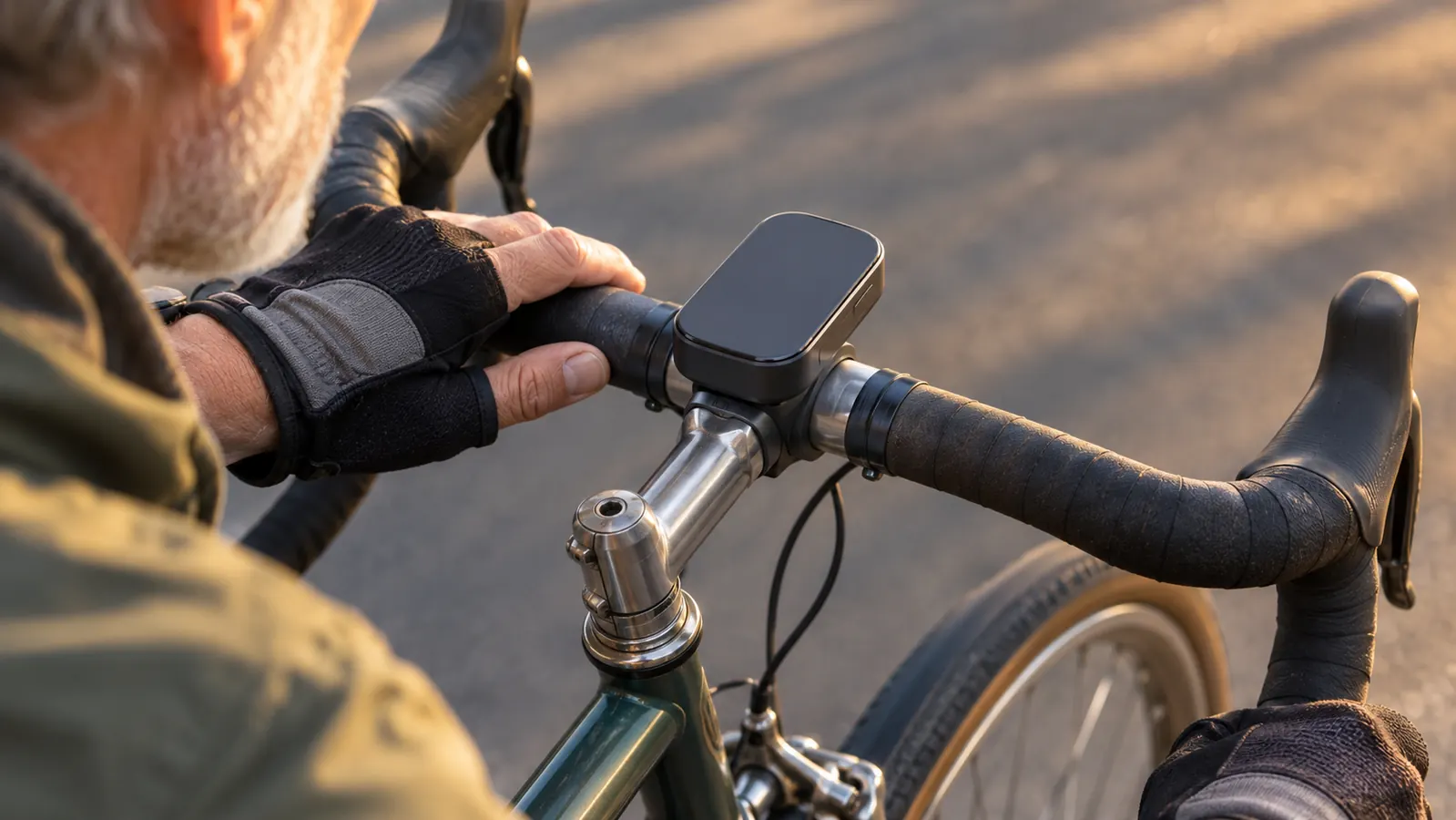
Ed's Bolt was navigating before I had finished reading my own quick start guide. Setup runs through the phone, routes get built in the app, and the whole thing asks you to learn a few buttons and a handful of screens. For a rider who wants to ride and not configure, that is the better deal, and it is not close. I have watched him add a route at a picnic table in under five minutes with a sandwich in his other hand. My first attempt at sending a route to the Garmin took me most of an evening and one phone call to my daughter. What I noticed most is that he never once looked at a manual. He set it up on his kitchen table the week it arrived, took it out the next morning, and it worked. Two years on he has not changed how it is set up, because he has never needed to. That is a kind of reliability I did not appreciate until I had spent a weekend in menus.
The menus are shallower, too. My Garmin has layers, and after two years I still occasionally press the wrong button and end up three screens from where I wanted to be, usually at a stop sign with a car waiting. Ed's unit does fewer things and makes each of them obvious. If your patience for equipment is short, and mine is shorter than it used to be, fewer menus is worth a great deal. Simplicity is a feature that does not show up in a spec list and does more for a long day than half of what is on one.
Two years, 8,000 miles, and I would buy the same one again
Buttons, not a touchscreen. North America maps on the device. ClimbPro for the grades that hurt. It took two weekends to learn and it has not missed a ride since.
Amazon Check Today's Price on Amazon →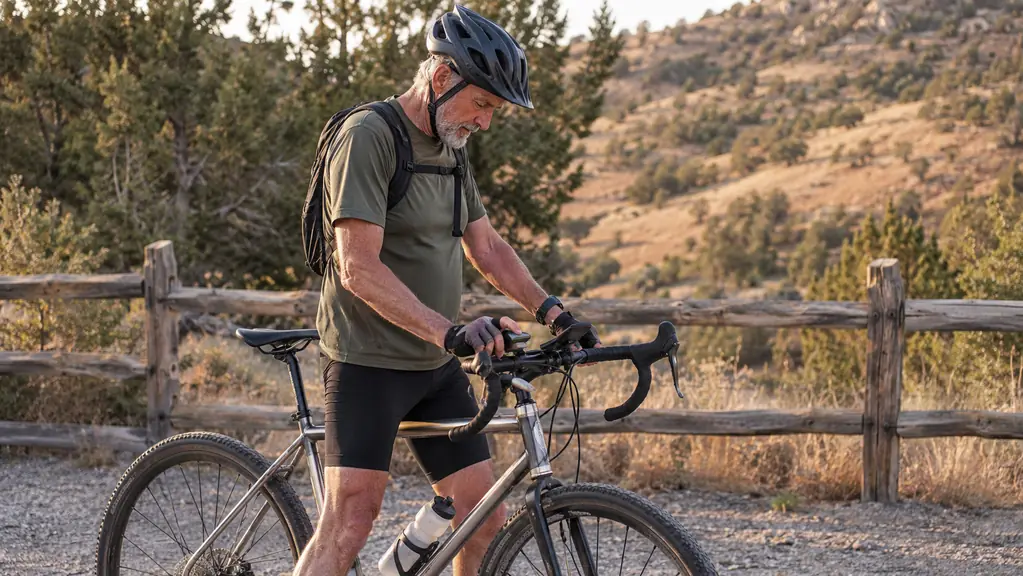
What Two Years of Buttons Taught Me
The button menus are slow to learn and I will not pretend otherwise. Two weekends of poking at it at the garage bench, plus one ride where I got it into a screen I could not get out of and had to stop and press my way back to the map, and then it clicked. I wrote the button order on the back of a receipt and taped it to the bench, the same way I used to keep notes on a new jig. After about a month I threw the paper away. The 2.6 inch screen is fine in daylight and sharp enough that the numbers do not fuzz. With my reading glasses it is fine at a glance. Without them, at arm's length on the bars, the smaller fields are a squint, and I now run fewer and larger ones. If your close-up vision is worse than mine, set it up that way from the start and save yourself the aggravation.
The mount came in the box and went on the stem with a hex key in about ten minutes. Pairing with my phone over Bluetooth took one attempt. My whole routine now is this: the night before a long day I sit at the computer with a cup of coffee, plan the route, check it against the roads I already know, send it to the Edge, and go to bed. In the morning it is waiting, and I do not think about it again until the first junction. That is the entire workflow, and it replaced a fold of paper and a phone I was afraid to touch with sweaty hands. The part I got wrong at first was letting the software be clever for me. I asked it for a loop in the hills and it handed me a road with loose gravel and a cattle guard in it. Now I draw the routes myself and use the device for navigation, not for ideas.
Here is the part I would tell anyone my age. A computer does not fix a body. My hands still go numb on chip seal around mile 50, my lower back stiffens on the long flats, and the left knee still complains when the road tilts up. The device tells me the grade. It does not make the gear easier and it will not loosen a stiff back. If numbness or a sore that will not heal is your problem, that is a conversation with your doctor, not a purchase. Buy the computer for navigation. Do not buy it expecting your hands to stop hurting.
The computer tells me the grade. It does not turn the pedals, and it will not loosen a stiff lower back.
Who Should Buy Which
Buy the Garmin Edge 540 if you ride roads you do not know by heart, if you ride alone more than half the time, and if knowing the remaining climb changes how you pace a day. Buy it if you will actually sit down for two weekends and learn it, with the manual open and the thing in your hand rather than on the bike. Buy the Wahoo ELEMNT Bolt if you want to be out the door the same afternoon, if you build routes on your phone anyway, and if a short menu list matters more to you than a map on the screen. Ed is 70, rides 60 mile days, and has never had a complaint about his. He also has never once wanted a bigger screen. He knows these roads the way I know the inside of my garage, and a rider like that needs turn prompts more than he needs a map.
The unglamorous truth is that either one gets you home if you charge it and load a route. Neither one is faster than the other, because a computer does not pedal. What I would not do is buy the more complicated device and then never learn it. A computer you do not understand is a battery with a stem mount, and it will sit there showing you a screen you squint at while your cue sheet stays folded in your pocket. Whichever way you go, spend the first rainy afternoon with the manual open and the thing in your hand, and set your fields large before your first long day rather than after it. That hour is worth more than the difference between the two.
If you ride alone, get the one with the maps already on it
The Garmin Edge 540 holds North America maps, 16 GB of storage, ClimbPro for the climbs, and 26 hours of rated battery, 42 in battery saver. Mine has been on the bars for two years and about 8,000 miles.
Amazon Check Today's Price on Amazon →