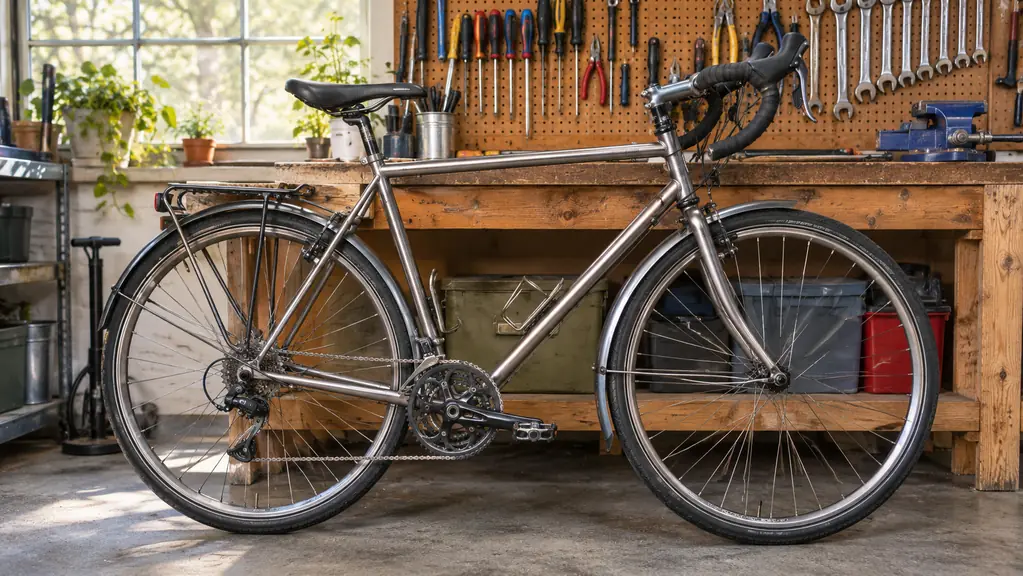
Two years ago I bought a Brooks England Cambium C17 Carved with my own money, bolted it to my steel touring bike the same afternoon, and told myself I would give it a fair run before I formed an opinion. Roughly 8,000 miles later I have one. Some of it is good and some of it is the sort of thing I wish somebody had said to me in the shop before I handed over the money. This is the honest version, not the brochure version.
Here is what this saddle did not do. It did not fix my lower back, which still stiffens on a long day. It did not stop my hands going numb somewhere past mile sixty. It did not turn me into a rider who floats. What it did was solve one problem completely and then stay out of my way for two years. That is a narrower claim than most reviews make, and it is the true one.
The Quick Verdict
Comfortable from the very first ride and it asks for nothing afterward. Firm enough to send some riders straight back to the shop, heavier than a race saddle, and offered in one width only.
Amazon Check Today's Price →The saddle I stopped thinking about somewhere around mile 300
No break-in, no conditioner, no rain cover. Firm, waterproof, and the same from March to November. If you want cushion under you, look elsewhere. If you want to stop fiddling, start here.
Amazon Check Today's Price on Amazon →How I've Used It
My bike is a steel touring frame with a 9 speed drivetrain, rim brakes, and 32 mm tires with tubes. I run about 60 psi in the front and 65 in the rear, which is my setting for my weight and my roads and not a rule for anybody else. I ride 50 to 70 miles a day, twice a week, spring through fall, and shorter midday loops through the winter. Prescott sits at about 5,400 feet, so nearly every ride has real climbing in it. I put in roughly 4,000 miles a year.
I replaced my whole kit in one go, the first week of March about two years ago. The trigger was a single 80 mile ride the fall before that ended badly. Sore in two places, a flat I fought for twenty minutes with the wrong tools, and a wrong turn that added six miles I did not have in me. I came home and decided the equipment was the problem. The saddle on the bike at that point was the one that came with it. I bought the Brooks England Cambium C17 myself. Nobody gave it to me and nobody asked me to write this.
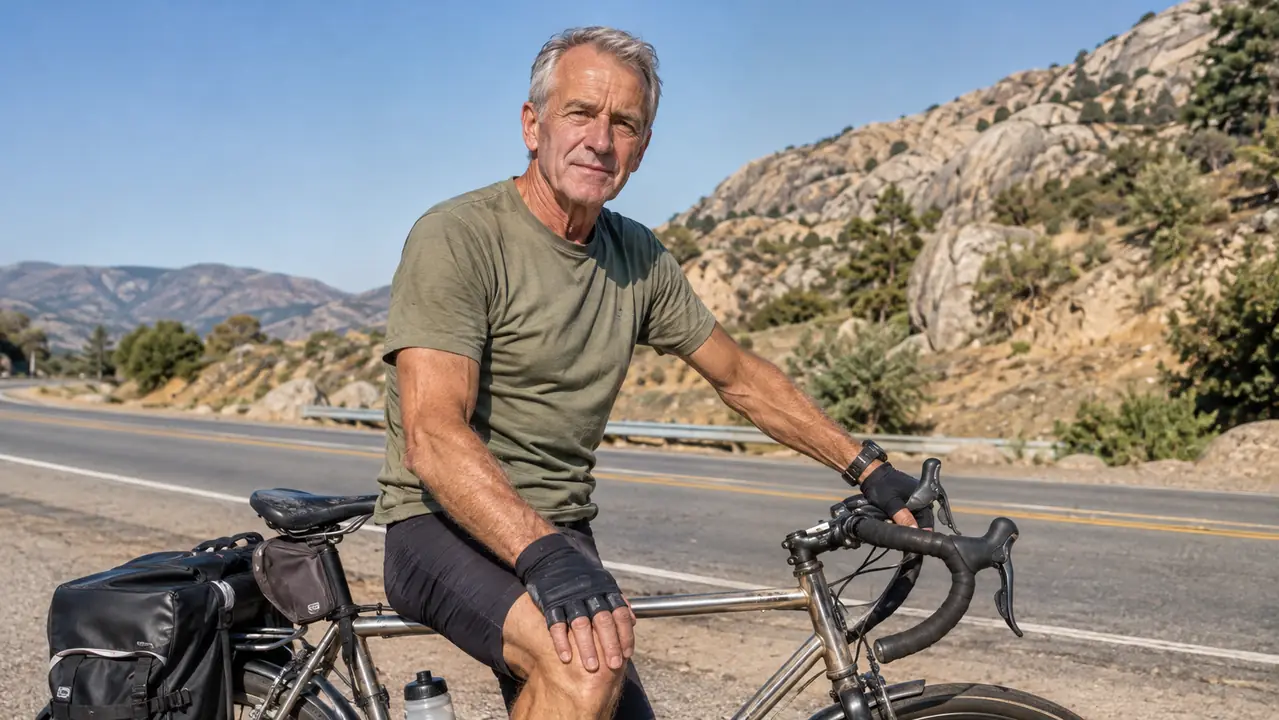
My regular loop runs north out of Prescott toward Chino Valley and back, about 62 miles with a little over 3,000 feet of climbing in it, and it has become my measuring stick. Same road, same two climbs, same wind out of the south most afternoons. I ride it on Tuesdays and again on Fridays when the weather holds, and I have ridden it now in everything from a cold headwind in April to a hundred degree afternoon in July. The first time I rode it with the Cambium on the bike, in the second week of March, I finished and noticed I had not thought about the saddle once in five hours. I had thought about my lower back, the headwind, and whether I had brought enough water. That is the review, really, more than anything I can put in a paragraph.
Since then the saddle has been on the bike for every mile. I have not swapped it off for a century day, a gravel stretch, or a climb-heavy morning. It has been rained on, dusted out, left in a hot garage through July, wiped down after muddy loops, and bolted back on every time. Two winters of short loops and two full seasons of long days is about as fair a trial as I know how to give a bicycle part.
The Top Is Rubber, Not Foam
People hear the name and picture padding. There is none. The top is vulcanized natural rubber under an organic cotton canvas, with a thin layer of structural textile underneath for resilience and a waterproof nylon cover over the whole thing. No foam, no gel, no leather, and no tension bolt to take up as it ages. The design idea is that the rubber flexes with your pedal stroke instead of mashing flat under your weight, and after two years I think that idea holds up.
Before this I was on the stock saddle that came with the bike, and for three years I assumed the soreness was mine to fix. I tried a padded cover, which lasted one ride before it slid sideways on the first climb. I tried tilting the nose up, which traded one problem for a worse one somewhere else. I tried standing more, which cost me on the long grades where I want to stay seated and spin. The stock saddle was not defective. It was soft foam, and soft foam collapses under a 160 pound man somewhere around mile forty, every single time, no matter how much I paid attention to it.
The difference shows in the first hour. A padded saddle compresses under you and, by mile forty, has compressed to roughly nothing. The rubber top does not compress much at all. It gives slightly and follows you, so the pressure stays spread across the sit bones instead of concentrating into two hot spots. On my bike that was the whole change. The soreness I used to get at the two hour mark stopped arriving.
It is also firm, and firm is where people get off. Riders used to a soft seat sit on this thing for ten minutes, decide it is a plank, and take it back. It is not a plank. It is a saddle doing exactly what it was built to do, and whether you enjoy that is a question about your backside, not about quality control. My advice is to give it three real rides before you make up your mind.
There is no break-in on this saddle. The week I spent getting comfortable was spent adjusting my bike to me, not the rubber to my back.
Two Years and Roughly 8,000 Miles: What Held Up
The maintenance story is why it is still bolted on. I have done nothing to this saddle in two years. No conditioner, no leather food, no rain cover, no tightening, nothing. I wipe it with a damp rag when I wash the bike and that is the whole ritual. Brooks England builds the top to be waterproof and weatherproof, and through two Prescott summers and two winters of cold midday loops, it has not soaked through, sagged, or started to squeak at the rails.
I keep a small notebook in the garage, mostly for tire pressure and chain wear, and the saddle has exactly three entries in two years. One is the day I bolted it on, with the height written down. One is the morning I checked the rail bolts after a stretch of washboard gravel out past the cattle guard and found them still tight. The third is a wet ride in September when a storm caught me west of Chino Valley and I rode the last eleven miles in rain coming down hard enough to sting my face. I got home, wiped the top with a rag, and it was dry under my hand within a few minutes.
The shape has not changed either. A leather saddle gradually takes your form. This one does not mold to you, it keeps being itself, mile after mile. Whether that is a virtue depends on what you wanted. I wanted the same feel in April as in October, and I got it. The top carries marks from gravel dust and one memorable meeting with a cattle guard, but nothing has cracked, split, or come apart.
Weight is the trade. It is listed at 450 grams, a shade under 16 ounces, and the whole saddle measures about 11 inches long by 6 and a half inches wide by 2 inches tall. That is heavier than what a racing friend of mine rides. I am 5 foot 10, about 160 pounds, and my days are long and unhurried. I stopped caring about grams around the time I started carrying a proper tool kit in the seat bag.
The Parts Nobody Tells You
First, one width. Six and a half inches across, and that is your lot. There is no narrow or wide version of this exact model to trade into later. If your sit bones want something different, no amount of tilt and height work will fix it. Measure yourself or get measured at a shop, or buy from somewhere with a return policy you actually trust. This is the number one reason people end up unhappy with a saddle they otherwise like.
Second, the firm top is genuinely not for everyone, and the riders who dislike it are not wrong. If your riding is twenty minutes to the store in soft trousers, a stiff rubber top is the wrong tool and you will feel every bump through it. The center cutout on this Carved model does help on long days, and I notice it most on sustained climbs, but a cutout does not turn a firm saddle into a soft one. It relieves one kind of pressure, not all of them.
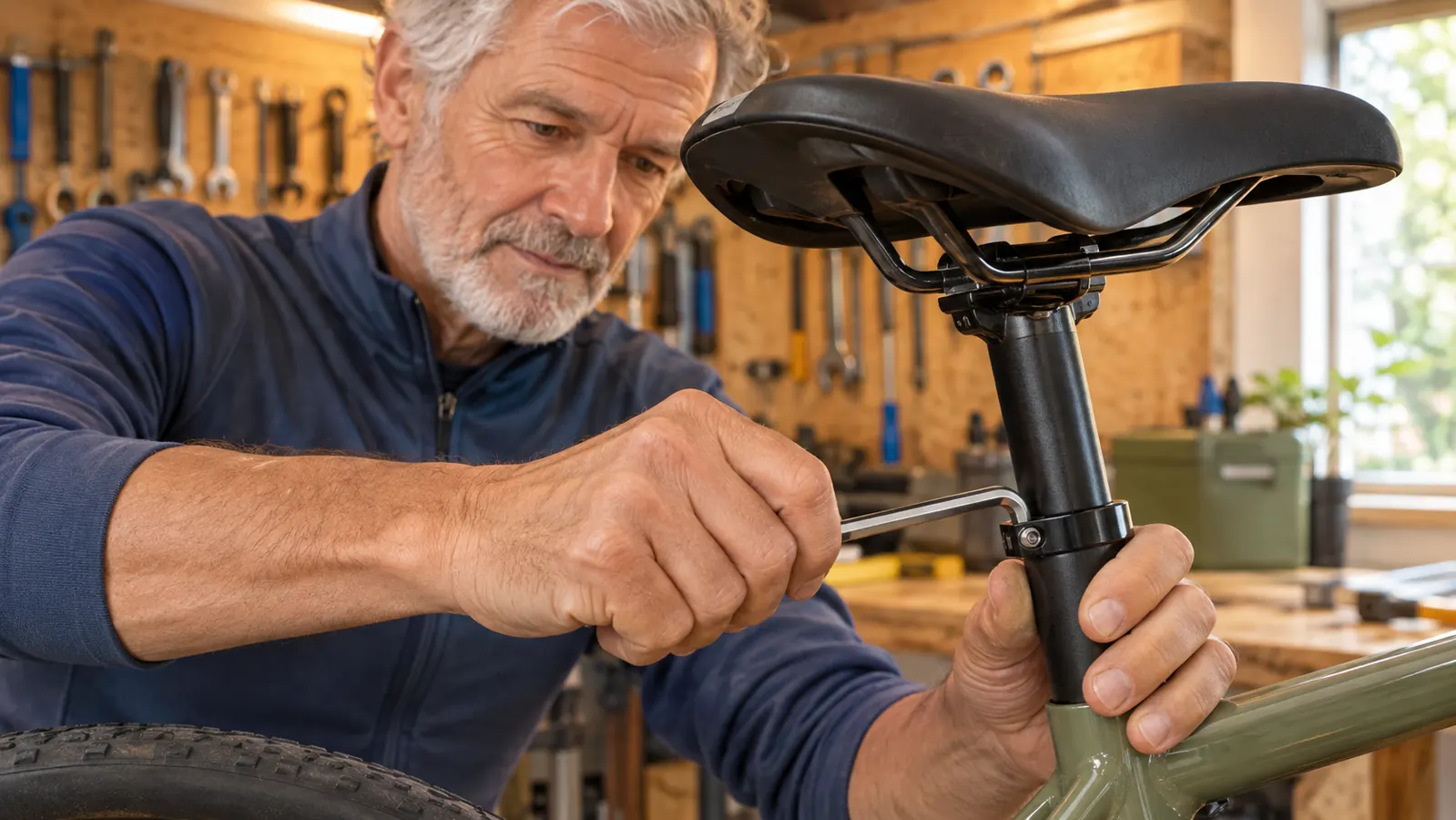
Third, and this is the one that costs people money, is setup. The saddle wants to be level or a degree or two nose down, and it wants height right to within a quarter inch. My first week I had it up, down, and slid back and forth on the rails, chasing something I already had and had never measured.
I marked the post with a strip of masking tape and a pencil line, then moved the saddle in increments of about an eighth of an inch, riding the same three mile out-and-back each time so the comparison meant something. Two increments up, one back down. It took four evenings after work in the garage. What I landed on was very close to level, maybe a degree nose down, and a hair lower than where I had started. Anybody with a good eye and a tape measure could have found it in ten minutes. I found it in a week because I changed three things at once and then could not tell which one mattered. Once I set the height properly, the saddle disappeared underneath me. The week was the adjustment, not the break-in.
Where Ed's Leather B17 Still Wins
My riding partner Ed is 70, a retired mail carrier, and he has run a Brooks B17 leather saddle for years. I have never owned one and I am not going to pretend I have. From watching his bike and listening to him talk about it, leather does one thing the Cambium cannot. It takes your shape. After a few months the leather top has molded itself around the particular geography of the person sitting on it.
The price of that is care. Leather wants feeding, it does not enjoy a soaking, and it asks for attention I am not willing to give a bicycle part at this stage of my life. The Cambium is the opposite bargain. It never becomes yours, and it never asks you for anything. If you want a saddle that learns you, go leather. If you want one you can forget about, go rubber. Both are honest choices.
What I Would Do Differently
I would have set the height before I formed any opinion. I spent a week blaming the saddle for a saddle position that was two centimeters low, which is a stupid way to spend a week. Mark your current height on the post before you remove anything, put the new saddle on at that mark, and ride it before you touch a single bolt. Then change one thing at a time.
I would also have checked the width question first. Six and a half inches works for me and it may not work for you, and no review on the internet can settle that for you. Sit bones are a body measurement, not a preference. And if you are coming off twenty years on one saddle, keep it in the garage for a month rather than selling it the same weekend you bolt on the new one.
What I Liked
- Comfortable from the first ride, with no break-in to endure
- Nothing to maintain, no conditioner and no rain cover
- Waterproof top handles wet weather and a hot garage
- Same shape and feel two years and roughly 8,000 miles on
- Center cutout eases pressure on long climbs
- Rubber top follows the pedal stroke instead of flattening
Where It Falls Short
- Firm enough that some riders never get used to it
- Heavier than a race saddle at 450 grams
- One width only, 6.5 inches across
- Setup takes patience and a marked seatpost
- Does not mold to your body the way leather does
- Wrong choice entirely for short trips in soft clothing
Who This Is For
This suits a rider who puts in long, steady days and wants to think about the saddle exactly never. If you are past 50, if your hands and your back are already the limiting factors on a ride, and if you cannot face one more piece of gear that needs looking after, the Brooks England Cambium C17 Carved is a sensible purchase. It is also a good pick for wet country, because a waterproof top means no cover in the bag and no wet leather to worry about in the truck afterward.
It also suits a bike that already fits you. No saddle fixes a stem that is too long or bars that sit too low, and I learned that the expensive way over five years of long rides. Fix the fit first. Then spend money on the contact points, in this order: hands, rear, feet.
Who Should Skip It
Skip it if you want cushion. Skip it if most of your riding is short trips in soft trousers and you want something forgiving underneath you. Skip it if your weight is at or near the 100 kg limit Brooks England lists, unless you have talked it through with somebody who knows more about this than I do. And skip it if you have a history of saddle sores that has not been looked at, because no saddle is a treatment. See your doctor if it does not clear up.
Skip it too if you are chasing weight. There are saddles at half this one's mass. They cost more and they are less forgiving, but if the number matters to you more than the ride does, this is not your part and no review is going to change that.
If your long days keep ending in the same two sore spots, start here
I bought mine with my own money two years ago and I would buy it again. Check the width against your own sit bones first, set the height properly, and give it three real rides before you decide. The saddle does the rest.
Amazon Check Today's Price on Amazon →